15 B2B Cold Calling Tips That Get You More Meetings
Fifteen practical B2B cold calling tips for before, during and after the call, with example lines to say, the rules to check and the numbers to track each week.
The best B2B cold calling tips are simple: call the right people at the right time, give a clear reason for calling in the first 20 seconds, ask good questions, and ask for a meeting with two specific times. Most of the gains come from doing those basics every day, not from a clever line.
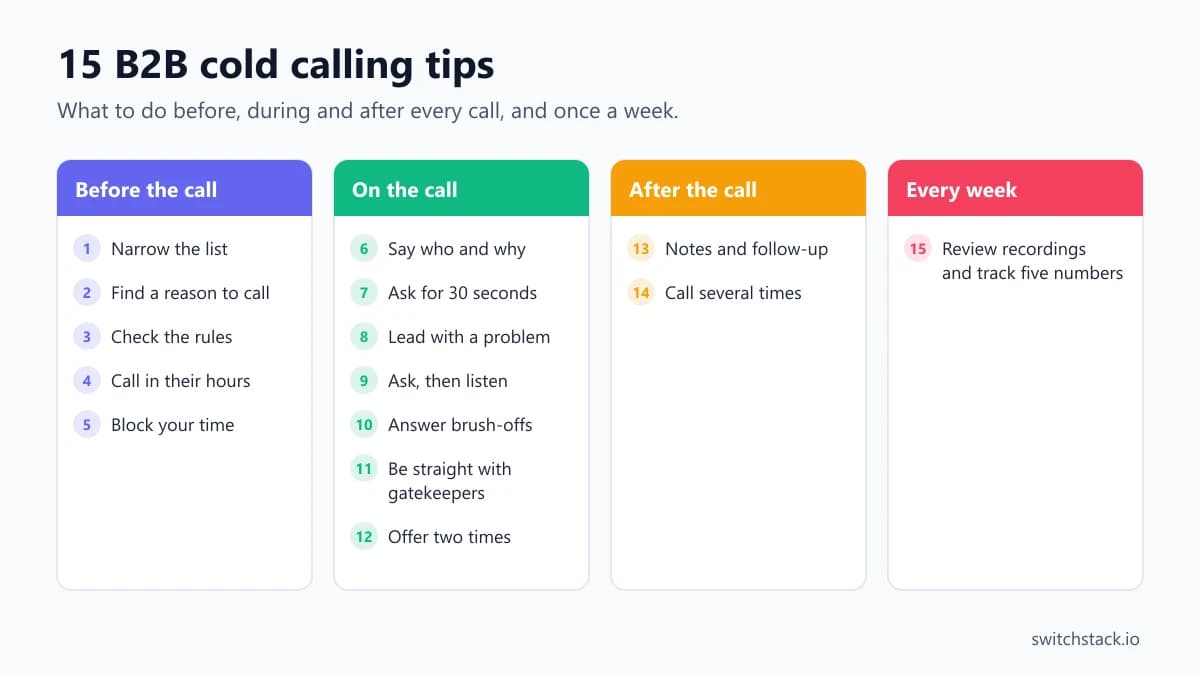
This guide gives you 15 practical B2B cold calling tips, grouped by when you use them: before the call, on the call, after the call and every week. Each one includes what to do and, where it helps, an example of what to say.
Table of Contents
- Before the Call
- On the Call
- After the Call
- Every Week
- What a Good Calling Day Looks Like
- 6 Mistakes That Undo Good Calls
- B2B Cold Calling Tips Checklist
- Where to Start If You're New to Cold Calling
- When to Get Help
Before the Call
Good calls start before anyone picks up. These first five B2B cold calling tips are about who you call, when you call and what you know before you dial.
1. Narrow Your List to One Market and One Buyer
A list of "companies that might buy" produces vague calls. Pick one industry, one company size and one job title for each calling block. For example: logistics companies with 50 to 500 staff, calling the operations director.
A narrow list lets you use the same reason for calling, the same questions and the same examples on every call. You get better quickly, because each call teaches you something about the next one.
2. Find a Reason to Call Each Company
Prospects listen when the call sounds like it's about them. Before each call, spend 30 seconds looking for a reason: a job posting, a new office, a recent expansion, a change in leadership or a common problem in their industry.
You don't need a full profile. One relevant fact is enough to turn "I'm calling everyone" into "I'm calling you because...". Of all the B2B cold calling tips here, this one does the most for your opener. Some common reasons and how to use them:
| What you notice | What you can say |
|---|---|
| A job posting for a role your product helps with | "I saw you're hiring two dispatchers, so I guessed scheduling might be stretched." |
| A new office or depot | "Congratulations on the new site. Teams opening a second location often run into..." |
| A new leader in the role you call | "I noticed you joined in the summer. New operations heads often review..." |
| A change in their industry | "With the new reporting rules starting in January, many firms like yours are..." |
3. Check the Calling Rules First
B2B cold calling is legal in most markets, but the rules differ. In the UK, the ICO's telephone marketing guidance says you must screen business numbers against both the TPS and the CTPS registers. In the US, the FTC explains that most business-to-business calls are exempt from the Telemarketing Sales Rule, but personal and mobile numbers still need Do Not Call checks.
Some countries are stricter. Germany, for example, needs at least presumed consent before a B2B call. Our cold calling laws by country page summarizes the rules for 18 markets.
4. Call in Your Prospects' Business Hours
People answer the phone during their working day. Call in your prospects' time zone, not yours. If your prospects are in Toronto and you're in London, your calling day starts after lunch. Our cold calling services page lists the business hours and calling rules for 18 markets.
For a starting point, Cognism's State of Cold Calling 2026 report found that 10am to 11am and 2pm to 3pm were the strongest windows, and Thursday the strongest day. Use those as a first guess, then check your own connect rates by hour after two weeks.
5. Block Your Calling Time
Cold calling works best in focused blocks. Set aside one or two hours with no email, no meetings and no breaks, and make every call in that time. Group your list by time zone so each block covers people who are at their desks right then.
Prepare everything before the block starts: the list, the reason for each company and your opener. Research during the block slows you down and breaks your rhythm.
On the Call
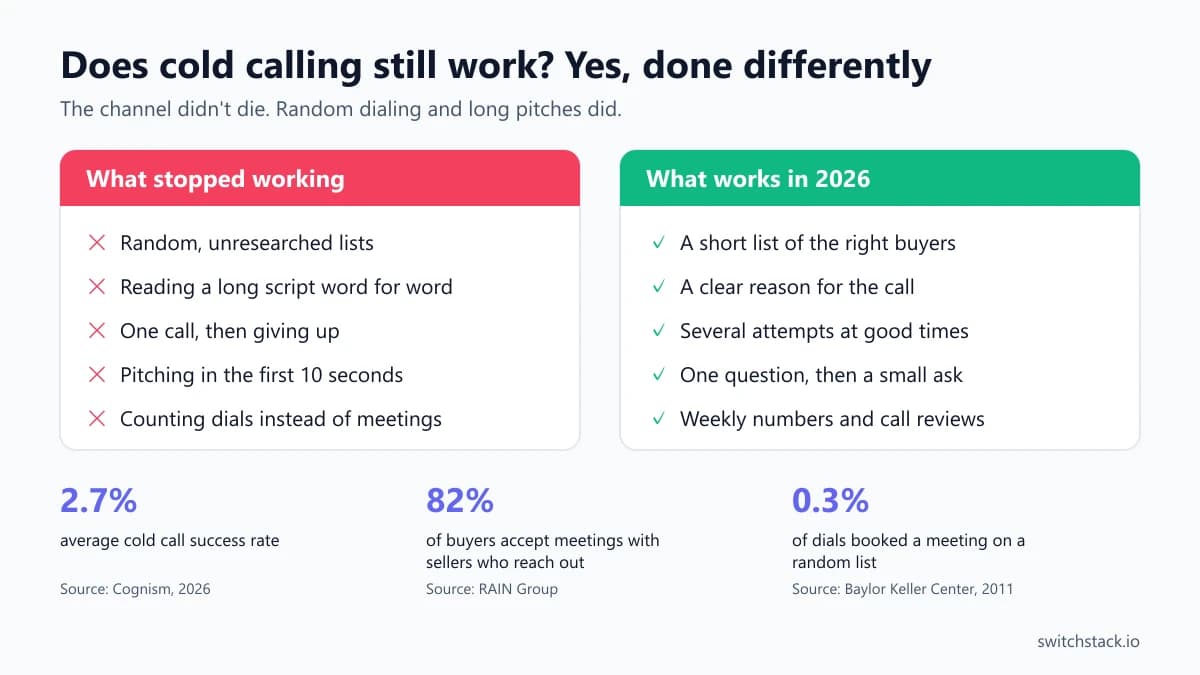
The next seven B2B cold calling tips cover the call itself, from the first words to the ask. Cognism's report puts the average cold call at 82 seconds, so every line has to earn its place.
6. Say Who You Are and Why You're Calling
Open with your name, your company and the reason for the call. Avoid questions that invite a quick no, such as "Is this a bad time?"
"Hi Priya, it's Sam from [Company]. I'm calling because we help logistics firms cut the time their drivers spend on paperwork, and I saw you've just opened a second depot."
A clear reason is respectful. It tells the prospect what the call is about, so they can decide whether to keep listening.
7. Ask for 30 Seconds
After the opener, ask for a short, specific amount of time:
"Can I take 30 seconds to tell you why I called, and you can tell me if it's worth a longer conversation?"
Many people will give you 30 seconds when you ask politely and admit the call is unexpected. Then keep your promise and stop after 30 seconds. Our guide to cold calling openers that actually work has seven more openers for different situations.
8. Lead With a Problem, Not Your Product
Prospects don't care about your features yet. They care about their problems. Name one or two problems that companies like theirs often have, then ask if either sounds familiar:
"Operations directors we speak to usually mention two things: drivers losing an hour a day to paperwork, and delivery notes going missing. Is either of those true for you?"
If they say yes, you have a conversation. If they say no, you've learned something about your list without pushing a pitch at them.
9. Ask, Then Listen
Ask one question at a time, then stop talking. Let the prospect finish, even if there's a short pause. Pauses often come before the most useful answer.
Good questions are short and open: "How do you handle that today?" "What happens when it goes wrong?" "Who else deals with this?" Write down their exact words. You'll use them in the follow-up email and in the handover note if you book a meeting.
10. Answer Brush-Offs With a Question
Most prospects say something to end the call early: "Send me an email," "We're all set" or "Not a good time." These are usually reflexes, not final answers. Respond calmly with a question that keeps the conversation going:
- "Send me an email." "Happy to. So that I send something useful, what's the biggest issue you'd want it to cover?"
- "We're all set." "Good to hear. Out of interest, what do you use today, and what would you change about it if you could?"
- "Not a good time." "No problem. Is Tuesday morning or Thursday afternoon better for a two-minute call?"
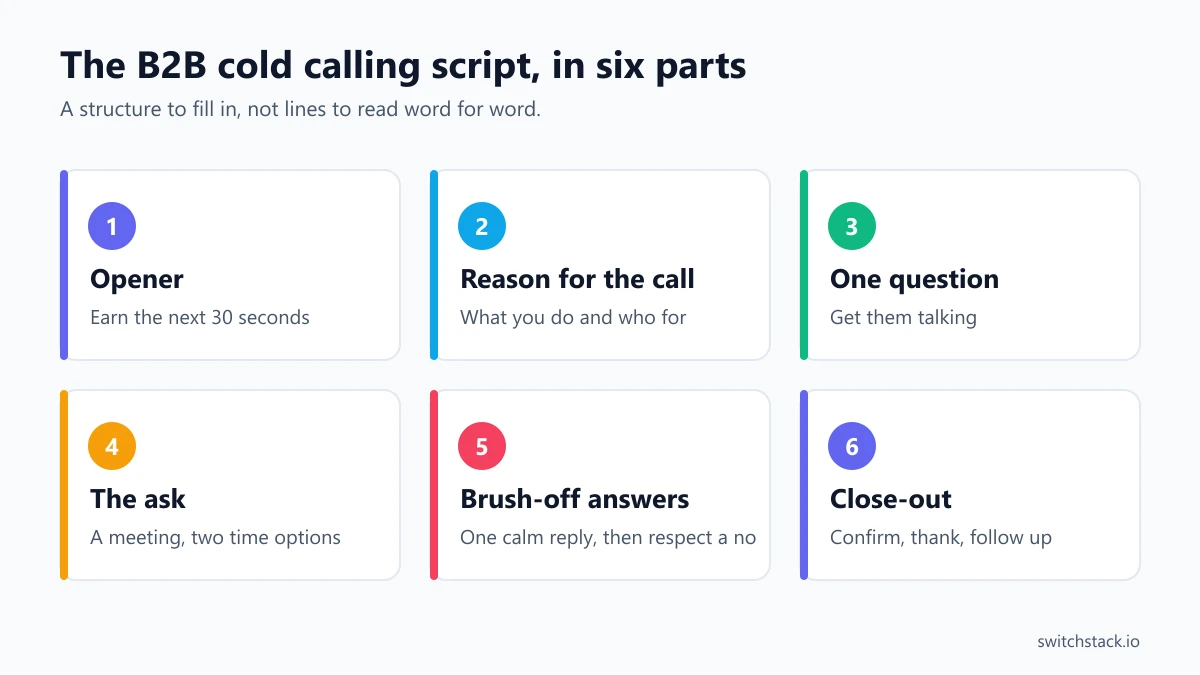
If they say no a second time, thank them and end the call politely. Our B2B cold calling script template includes more brush-off answers you can adapt.
11. Be Straight With Gatekeepers
Receptionists and assistants protect their boss's time. Don't try to trick your way past a gatekeeper. Give your name, ask for the person by name and give a short, honest reason:
"Hi, it's Sam from [Company]. Could you put me through to Priya Shah? It's about how the new depot handles driver paperwork."
If they won't connect you, ask for help instead: the best time to call back, a direct line or the right person for the topic. Note their name and use it next time.
12. Ask for the Meeting With Two Times
When the prospect is interested, ask for a short meeting and offer two specific times:
"Would a 20-minute call with our founder make sense? Would Tuesday at 10 or Wednesday at 2 work better?"
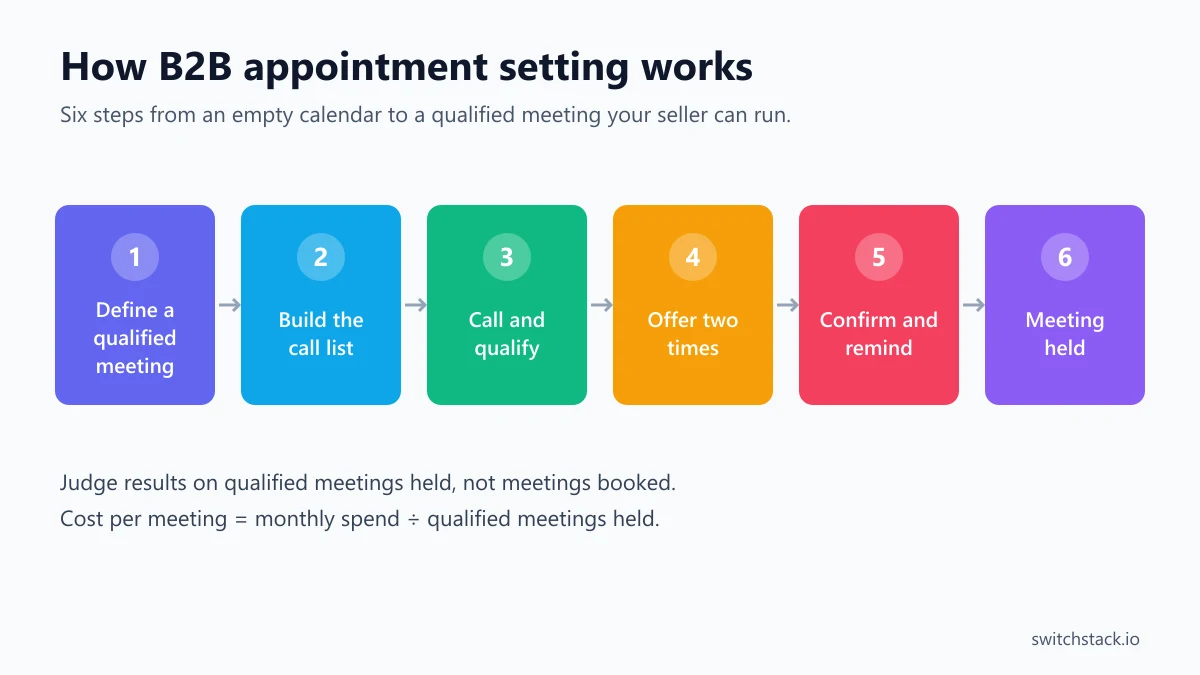
Two options are easier to answer than "When are you free?" Send the calendar invite while they're still on the line if you can. Our guide to B2B appointment setting covers what happens after the yes, including how to confirm the meeting and reduce no-shows.
After the Call
The two B2B cold calling tips in this section are about the two minutes after each call. Those minutes decide whether a good conversation leads anywhere.
13. Write Notes and Follow Up Straight Away
After every conversation, write down what the prospect said, any objection, and the next step with a date. Do it before the next dial, while you still remember the details.
If you booked a meeting, send a short confirmation email right away. If they asked for information, send it within the hour and mention something they said on the call. A follow-up that quotes the prospect's own words shows you were listening:
Subject: Missing delivery notes at the new depot
Hi Priya, thanks for the quick chat today. You mentioned delivery notes have been going missing about once a week since the second depot opened. Here's the one-page summary I promised, focused on that. If it's useful, the Wednesday 2pm slot is still free for a 20-minute call.
14. Call Each Prospect Several Times
Few prospects answer the first call. Plan several attempts over two to three weeks, at different times of day, such as one morning call and one afternoon call each week.
When you reach voicemail, leave a short message with your name, your number and one line about why you called, then send an email that says the same thing:
"Hi Priya, it's Sam from [Company] on 020 7946 0000. I'm calling about driver paperwork at your new depot. I'll send you a short email now and try you again on Thursday."
Leave at least a couple of days between attempts. Stop as soon as anyone asks you not to call again, and record that so nobody on your team calls them either.
Every Week
The last of these B2B cold calling tips is the one that makes all the others work: improve a little every week.
15. Review Recordings and Track Five Numbers
Call recordings show you exactly what happened: where prospects leaned in and where they tuned out. Each week, listen to two calls that went well and two that didn't, and pick one thing to change. Check the recording rules where your prospects are, since some places require you to tell the other person.
Then track five numbers every week:
| Number | What it tells you |
|---|---|
| Dials | How much calling you did |
| Connects | Whether your list and timing reach real people |
| Conversations | Whether your opener earns 30 seconds |
| Meetings booked | Whether your questions and ask work |
| Meetings held | Whether your confirmation and reminders work |
Change one thing at a time, such as the opener, the reason for calling or the calling hours, and compare the numbers before and after. Our guide to how many cold calls it takes to book a meeting shows how to work out each rate from one week of calls.
What a Good Calling Day Looks Like
Here is how the B2B cold calling tips above fit into one day, for a caller whose prospects are in New York. The two calling blocks sit on the strongest windows in Cognism's report. They avoid the weakest ones it found: before 9am, 12pm to 1pm and after 4pm.
| Time (prospect's time zone) | What the caller does |
|---|---|
| 8:30am to 9:30am | Prepare: final list, a reason to call next to each company, opener practiced out loud |
| 9:30am to 11:30am | Calling block 1: calls only, no email |
| 11:30am to 12pm | Notes, follow-up emails and calendar invites |
| 12pm to 1pm | Lunch, then research for the afternoon list |
| 1pm to 2pm | Voicemail follow-ups and confirmations for tomorrow's meetings |
| 2pm to 3:30pm | Calling block 2: calls only, no email |
| 3:30pm to 5pm | Notes, follow-ups, two call recordings, and tomorrow's attempts planned |
For a caller in Manila, this is a night shift, because New York is 12 or 13 hours behind, depending on daylight saving. That's normal for callers who work North American hours. The schedule is the same; only the clock on the wall changes.
6 Mistakes That Undo Good Calls
Even the best B2B cold calling tips won't help if these habits creep in:
- Pitching before asking a question. If the prospect hears a product pitch in the first 20 seconds, they assume it's a sales call and look for the exit.
- Talking too fast. Nerves speed you up. Slow down, especially when you say your name and your company.
- Arguing with an objection. Nobody wins an argument on a cold call. Ask a question instead, or thank them and move on.
- Calling the wrong level. Too senior and you won't get through. Too junior and they can't agree to a meeting. Call the person who owns the problem.
- Giving up after one attempt. One unanswered call tells you nothing. Plan several attempts before you mark a prospect as unreachable.
- Losing do-not-call requests. If one caller hears "don't call me again" and a colleague calls next week, you lose trust and may break the rules.
B2B Cold Calling Tips Checklist
Run through this short version of the B2B cold calling tips before each calling block:
- One market, one company size and one job title on the list
- A reason to call written next to each company
- Numbers checked against the right do-not-call registers
- Calling block set for your prospects' business hours
- Opener, two problems, three questions and the ask written down
- Two answers ready for "send me an email" and "we're all set"
- Two meeting times ready to offer
- Notes, follow-ups and next attempts logged after every call
Where to Start If You're New to Cold Calling
Don't try all 15 B2B cold calling tips at once. Start with three:
- A reason to call each company (tip 2). It makes every opener stronger.
- Say who you are and why you're calling (tip 6). It earns you the next 30 seconds.
- Ask for the meeting with two times (tip 12). It turns good conversations into meetings.
Use those three for a week and track your five numbers. Then add one new tip each week, starting with the step where your numbers drop the most. If plenty of people answer but few conversations last, work on your opener. If conversations go well but few end in a meeting, work on your questions and your ask.
When to Get Help
These B2B cold calling tips work when someone does them every day, for hours at a time. That's the hard part for most small teams, because the founder or the sales lead is also running meetings and closing deals.
If you'd rather not do the calling yourself, Switchstack can do it for you. With We Call for You, we supply, train and manage a dedicated caller who books meetings straight onto your calendar. With Hire a Caller, you get a vetted, full-time caller who works your list and reports to you. Callers work from the Philippines, India, South Africa or Latin America, matched to your market, and call during your prospects' business hours.
Both services are month to month, with no setup fee and a free replacement in the first 30 days. Every new client gets 20% off the first 2 months. See the pricing page for prices by caller country, or use our country matcher to find the right fit for your market.
Frequently Asked Questions
What is the most important B2B cold calling tip?
What is the best time to make B2B cold calls?
How many times should I call a B2B prospect?
Should I use a script for B2B cold calling?
Is B2B cold calling legal?
Want us to make these calls for you?
Tell us who you want to reach. We'll make the calls and book the meetings, or find you a caller of your own. Pick a time for a free 30-minute call below.
- Free 30-minute call, no obligation
- 20% off the first 2 months
- No setup fee, month-to-month
- Free replacement in the first 30 days
Prefer email? [email protected]
See all pricesWritten by
Switchstack Team
Switchstack
Guides on cold calling and hiring callers from the Switchstack team.
Newsletter
Tactics worth your inbox.
Outbound tactics and product updates — only when we have something genuinely worth sharing.