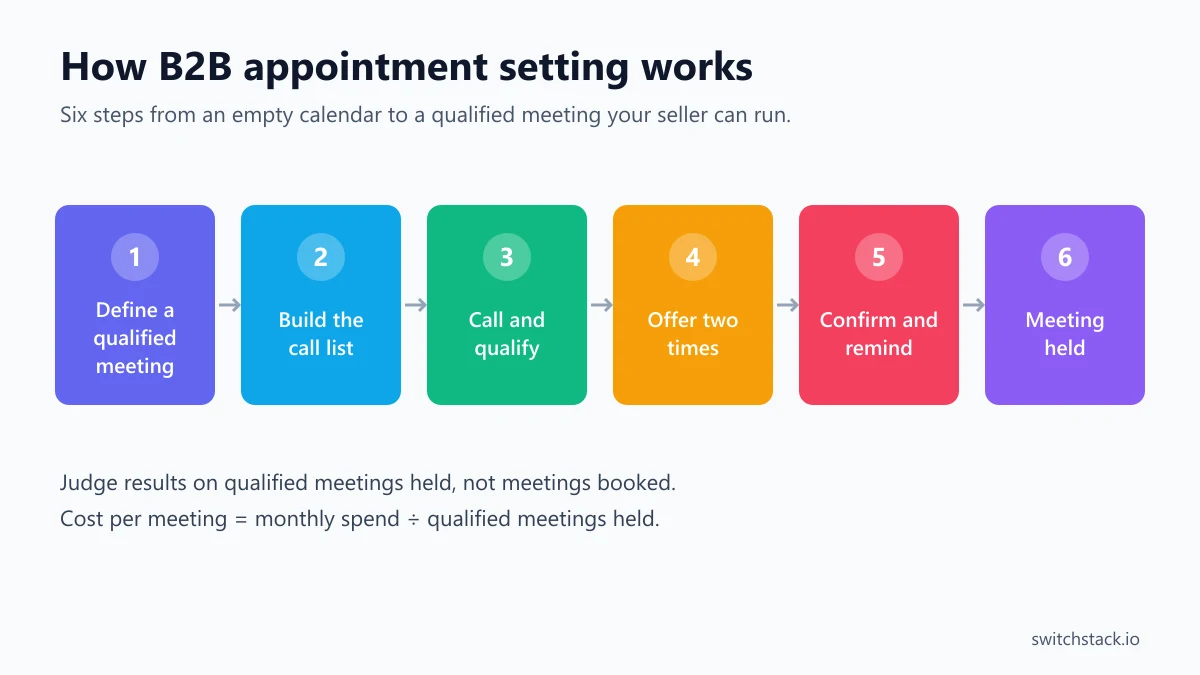
Does Cold Calling Still Work in 2026? An Honest Look at the Data
Yes, cold calling still works for B2B in 2026, but not the way it did ten years ago. What the latest numbers say, why it fails for some teams, and how to make it work.
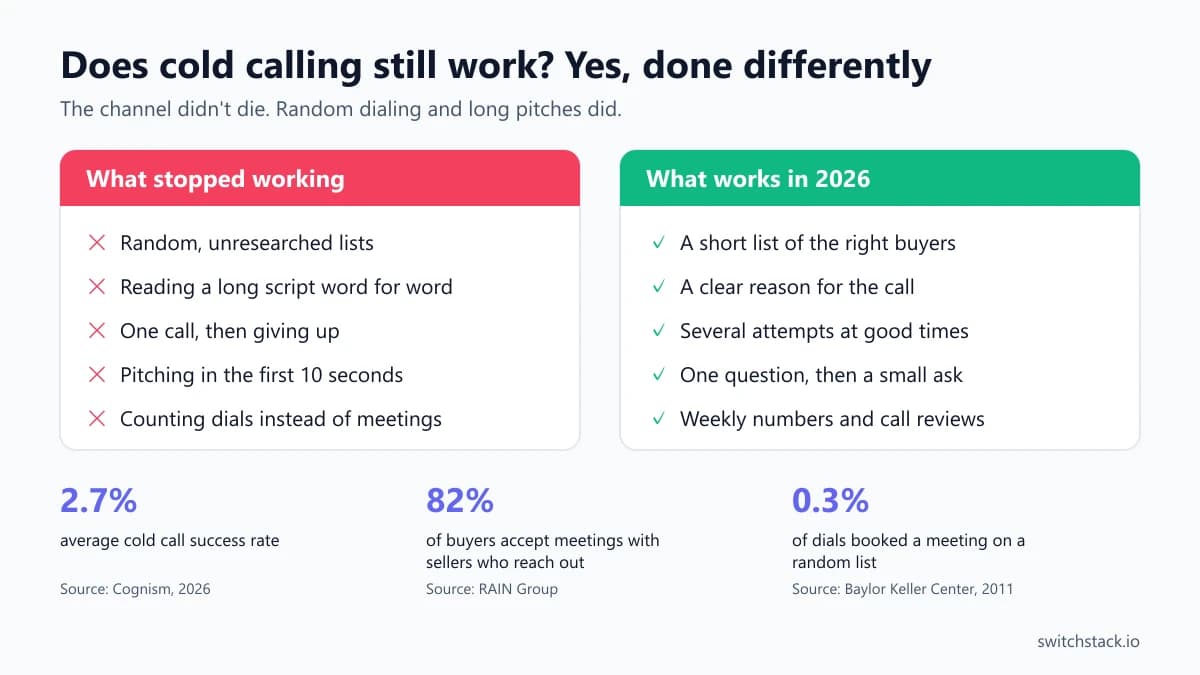
Does cold calling still work in 2026? Yes, for most B2B companies it does, but not the way it worked ten years ago. Random dialing with a long pitch gets very poor results. Short, well-targeted calls with a clear reason still book meetings with busy buyers. Below is what the latest data actually says, why so many teams decide calling is dead, when it fits your business, and how to make it work.
Table of Contents
- The Short Answer: Does Cold Calling Still Work?
- What the 2026 Numbers Say
- The Hard Baseline: Calling a Random List
- Why Buyers Still Pick Up the Phone
- Why So Many Teams Think Cold Calling Is Dead
- When Cold Calling Works Best
- When Cold Calling Is the Wrong Choice
- Cold Calling vs Cold Email: Which Works Better?
- How to Make Cold Calling Work in 2026
- What a Realistic First Month Looks Like
- Is Cold Calling Legal?
- How to Tell If Cold Calling Still Works for You
- Need Someone to Make the Calls?
The Short Answer: Does Cold Calling Still Work?
Yes. Cold calling still works when three things are true: you call people who could actually buy, you give them a clear reason for the call in the first 20 seconds, and you keep calling for long enough to see real numbers.
It stops working when any of those is missing. A random list, a script read word for word, or one call per prospect will give you poor results in any year.
So the better question is not "does cold calling still work?" but "does it work for my offer, my buyers and the way we call?" The rest of this guide helps you answer that.
What the 2026 Numbers Say
The most widely quoted current data comes from Cognism's State of Cold Calling 2026 report, produced with WHAM and based on more than 200,000 calls from 2025. Here is what it reports:
- Average success rate: 2.7%, up from 2.3% in the previous report. In the report before that, the figure was 4.82%.
- Cognism's own SDR team: 11.3%, up from 6.7% in the previous report.
- Attempts to reach a prospect: about 1.55 calls on average, down from 2.9.
- Average call length: 82 seconds across the industry, down from 93 seconds. Cognism's own reps average about two minutes.
- Best day: Thursday. Best windows: 10am to 11am, then 2pm to 3pm. The weakest times were before 9am, 12pm to 1pm and after 4pm.
Two cautions before you lean on these numbers. First, the report doesn't define "success," so you can't compare its 2.7% directly with your own meeting rate. Second, Cognism sells contact data, and its team's higher rate comes partly from using its own phone numbers. That doesn't make the data wrong, but it does make it a vendor's view.
The useful takeaway is the gap. The average sits under 3%, while a focused team reports more than four times that. The difference comes from who they call and how, not from the channel itself. So does cold calling still work by the numbers? Yes, but the average hides a very wide spread.
The Hard Baseline: Calling a Random List
For the opposite end of the range, look at a well-known study from Baylor University's Keller Center. In November 2011, 50 real estate agents made 6,264 cold calls over two weeks to a random list of numbers in an area nobody had marketed to before.
- 28% of the calls (1,774) reached someone.
- Those calls produced 19 appointments and 11 referrals.
- That works out to roughly 0.3% of dials turning into an appointment.
This is cold calling at its hardest: no research, no targeting, consumer numbers, and agents who weren't full-time callers. Even so, the study's author concluded that about 7.5 hours of calling per qualified appointment or referral was "a relatively strong ROI" for an agent.
Put the two sources side by side and you get a realistic range. Random dialing books meetings from well under 1% of dials. A focused B2B team with a good list does several times better. Where you land depends on how you run the calls.
Why Buyers Still Pick Up the Phone
Buyers say they are open to hearing from sellers. RAIN Group's sales prospecting research found that:
- 82% of buyers accept meetings with sellers who reach out to them.
- 70% of sellers who generate meetings use the phone to connect with buyers.
- It takes an average of 8 touches to generate a meeting with a buyer.
- Buyers want to talk to sellers early in the buying process, especially when they're looking for new ideas.
There's also a simple practical reason. A call is the fastest way to find out whether there is a fit. In two minutes you can learn whether the person owns the problem, whether the timing is wrong, or whether someone else handles it. An email thread can take two weeks to tell you the same thing.
Phone calls also stand out because fewer teams make them well. Inboxes are crowded with automated sequences. A short, polite call from a person who has clearly done some homework is rarer, and buyers notice.
Why So Many Teams Think Cold Calling Is Dead
When a team decides that cold calling doesn't work any more, it's usually for one of these reasons:
- The list was wrong. Calling people who can't buy guarantees a low success rate. Old lists also mean wrong numbers and people who left the company.
- The opener was a pitch. Starting with a long description of the product gets a fast "not interested." The first 20 seconds should explain why you called this person, not everything you sell. Our cold calling openers guide has seven examples.
- They gave up too early. If it takes several touches to get a meeting, one call per prospect will always look like failure.
- They counted the wrong thing. Counting dials rewards speed, not quality. What matters is conversations and meetings booked.
- Nobody listened to the calls. Without recordings and weekly reviews, the same mistakes repeat for months.
- The caller was alone and untrained. Cold calling is a skill. A new caller with no script, no feedback and no manager will struggle in any market.
None of these problems is caused by the channel. Each one can be fixed.
When Cold Calling Works Best
Cold calling tends to work well when:
- You sell to businesses. Business buyers have phones on their desks, budgets and clear problems. Calls during business hours fit how they work.
- Each customer is worth a lot. If one new client is worth thousands of dollars a year, a few hours of calling per meeting is easy to justify.
- You can name the buyer. You know the job title and the type of company that buys from you, so you can build a list of the right people.
- Your offer has a reason to talk now. A new rule, a busy season, a price change or a company growing fast gives you a natural reason for the call.
- A short conversation helps. If prospects usually have questions before they buy, talking beats sending another email.
Managed IT providers, accounting firms, commercial cleaning companies, staffing agencies, logistics companies and B2B tech companies all tend to fit this profile. Our guide on cold calling for IT service providers shows what this looks like for one industry.
When Cold Calling Is the Wrong Choice
Calling isn't right for everyone. Think twice if:
- Your product is cheap and sold once. If each sale is worth very little, the time per meeting won't pay off.
- You can't say who the buyer is. If "anyone could use this" is your target market, fix that before you call anyone.
- You sell to consumers. Calls to people at home come with strict rules, including the National Do Not Call Registry, and much lower tolerance. This guide is about B2B.
- You can't follow up quickly. Booking meetings that nobody prepares for, or that get rescheduled three times, wastes the effort.
Cold Calling vs Cold Email: Which Works Better?
This is the comparison most teams are really making when they ask "does cold calling still work?" The honest answer is that they do different jobs, and they work best together.
Cold email is cheap to send at scale and easy to ignore. It's good for sharing something the prospect can read later, like a short case for change or a link to a guide. It's weak at finding out quickly whether there is a fit, because most people never reply.
Cold calling costs more per touch, because a person has to make each call. In return you get a live conversation: you hear objections, learn who really owns the problem and can book a meeting on the spot. One good conversation often tells you more than a month of email opens.
Most teams that book meetings consistently use both. A typical pattern is a short email, a call two or three days later that mentions it, then a follow-up email that confirms anything agreed on the call. RAIN Group's finding that it takes about 8 touches to get a meeting supports this: few prospects say yes after a single email or a single call.
If you can only afford one channel and you sell something with a high value to a clear set of businesses, calling usually gets you answers faster. If your list is huge and each customer is worth little, email is the cheaper place to start.
How to Make Cold Calling Work in 2026
If cold calling fits your business, these steps make the biggest difference:
1. Build a short list of the right people
Start with 300 to 500 companies that match your best customers. Find the person who owns the problem, not just the most senior title. A smaller, accurate list beats a big, stale one every time.
2. Give a clear reason for the call
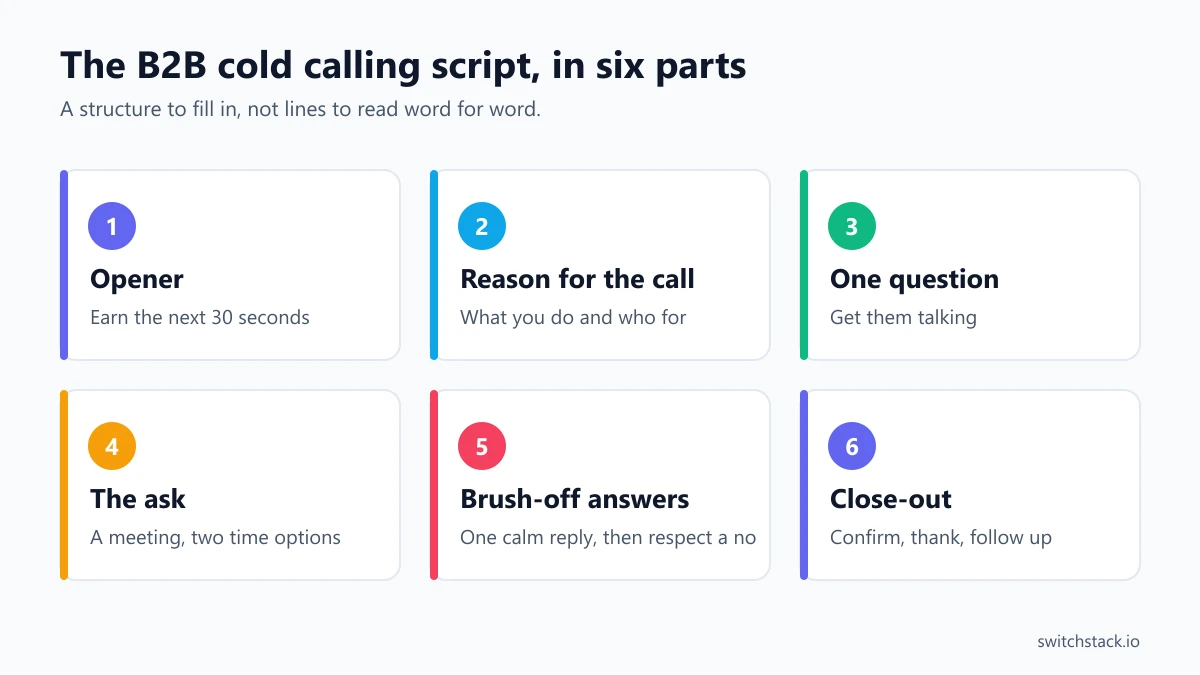
Say who you are, why you're calling them in particular, and what you help with, in two or three sentences. Then ask one question. Our B2B cold calling script template walks through each part with examples.
3. Ask for a small next step
The goal of a cold call is a meeting, not a sale. Offer two specific times for a 15 to 30-minute call. A small ask is easier to say yes to.
4. Call at good times, more than once
Use Cognism's findings as a starting point: Thursday, 10am to 11am and 2pm to 3pm in the prospect's time zone. Plan several attempts per prospect over two to three weeks, at different times of day.
5. Handle brush-offs calmly
"Not interested" and "just send me an email" are usually reflexes, not decisions. Agree, give one short reply, and ask a question. If they say no a second time, thank them and move on. Treat a gatekeeper the same way: be polite, be brief and ask for their help.
6. Record calls and review them every week
Listening to five calls a week teaches more than any training course. Note where calls end early and change one thing at a time: the opener, the question or the ask.
7. Measure the right numbers
Track dials, connects, conversations and meetings booked each week. Your connect rate tells you about list quality and timing. Your meeting rate tells you about the script and the caller. Our guide to how many cold calls it takes to book a meeting shows how to work out each rate.
What a Realistic First Month Looks Like
Teams often give up on calling in the first two weeks because they expect meetings on day one. A realistic first month usually looks like this:
- Week 1: setup. Build and check the list, write the first version of the script and practise it on role-play calls. Few or no meetings yet, and that's normal.
- Week 2: first live calls. Expect a lot of voicemail and brush-offs. The goal this week is clean data: how many dials, connects and conversations a full day of calling produces.
- Week 3: first changes. Listen to recordings, find where calls end early, and change one thing. This is often when the first meetings come in.
- Week 4: a real baseline. With three weeks of numbers you can see your connect rate and meeting rate, and decide whether to keep going, change the list or change the offer.
Judging cold calling on its first week is like judging a new hire on their first morning. Give it a month of steady, well-run calling before you decide.
Is Cold Calling Legal?
For B2B calls in the US, generally yes. The FTC's guide to complying with the Telemarketing Sales Rule says that most calls between a telemarketer and a business are exempt from the rule. There are exceptions. For example, calls to sell nondurable office or cleaning supplies are covered.
Other federal and state rules can still apply, especially to calls to mobile phones and to consumers. Laws also differ by country. This isn't legal advice, so check with a lawyer for your situation.
Whatever the law says, keep your own do not call list. If someone asks not to be called again, write it down and make sure nobody on your team calls them again.
How to Tell If Cold Calling Still Works for You
The only real answer to "does cold calling still work for us?" is your own numbers. Run a fair test:
- Call for at least two weeks with one caller working full days, using one list and one script.
- Track every call: dials, connects, conversations and meetings booked.
- Review recordings weekly and change one thing at a time.
- Look at cost per meeting. Divide what you spent on calling by the meetings booked, then compare it with what a new customer is worth to you.
If meetings are coming in at a cost that makes sense for your deal size, cold calling works for you, whatever anyone online says. If not, the call recordings will usually show why: the wrong people, the wrong opener or not enough attempts.
If you'd rather not build this in-house, our guide to in-house vs outsourced SDRs compares cost, control and ramp time. Our questions to ask a cold calling agency help you check a provider before you sign.
Need Someone to Make the Calls?
Knowing that cold calling still works is the easy part. Making good calls every day is the hard part. Switchstack offers two ways to do it:
- We Call for You ($2,499/month per caller): we supply, train and manage a dedicated Filipino caller who calls your prospects and books meetings on your calendar. We write the script with you, run daily quality checks, and send call recordings and a weekly report.
- Hire a Caller ($1,799/month per caller): a vetted, full-time Filipino caller works 40 hours a week in US business hours, works your list and reports to you. We handle payroll, HR and equipment.
Both have no setup fee, run month-to-month with 30 days' notice, include a free replacement in the first 30 days and start in about two weeks. Every caller is tested on role-play calls before you meet them. See pricing for the details, or book a 30-minute call to talk it through.
Frequently Asked Questions
Is cold calling dead in 2026?
What is a good cold calling success rate?
What is the best time to make B2B cold calls?
Is B2B cold calling legal in the US?
Is it better to hire a cold caller or outsource cold calling?
Written by
Switchstack Team
Switchstack
Guides on cold calling and hiring callers from the Switchstack team.
Newsletter
Tactics worth your inbox.
Outbound tactics and product updates — only when we have something genuinely worth sharing.