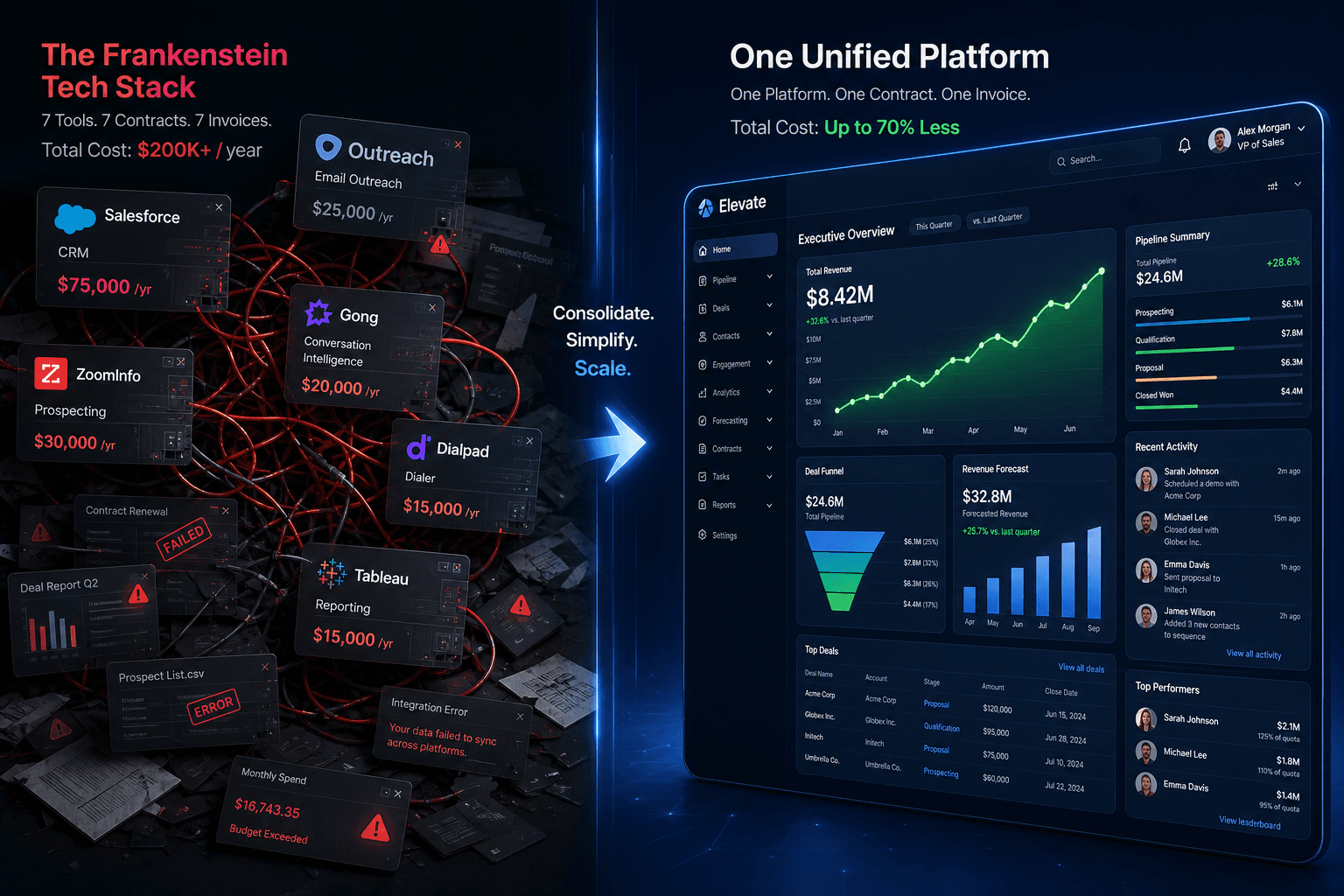
The Ultimate Guide to Building a Lean Outbound Sales Tech Stack: 7 Steps to Cut Costs by 60%
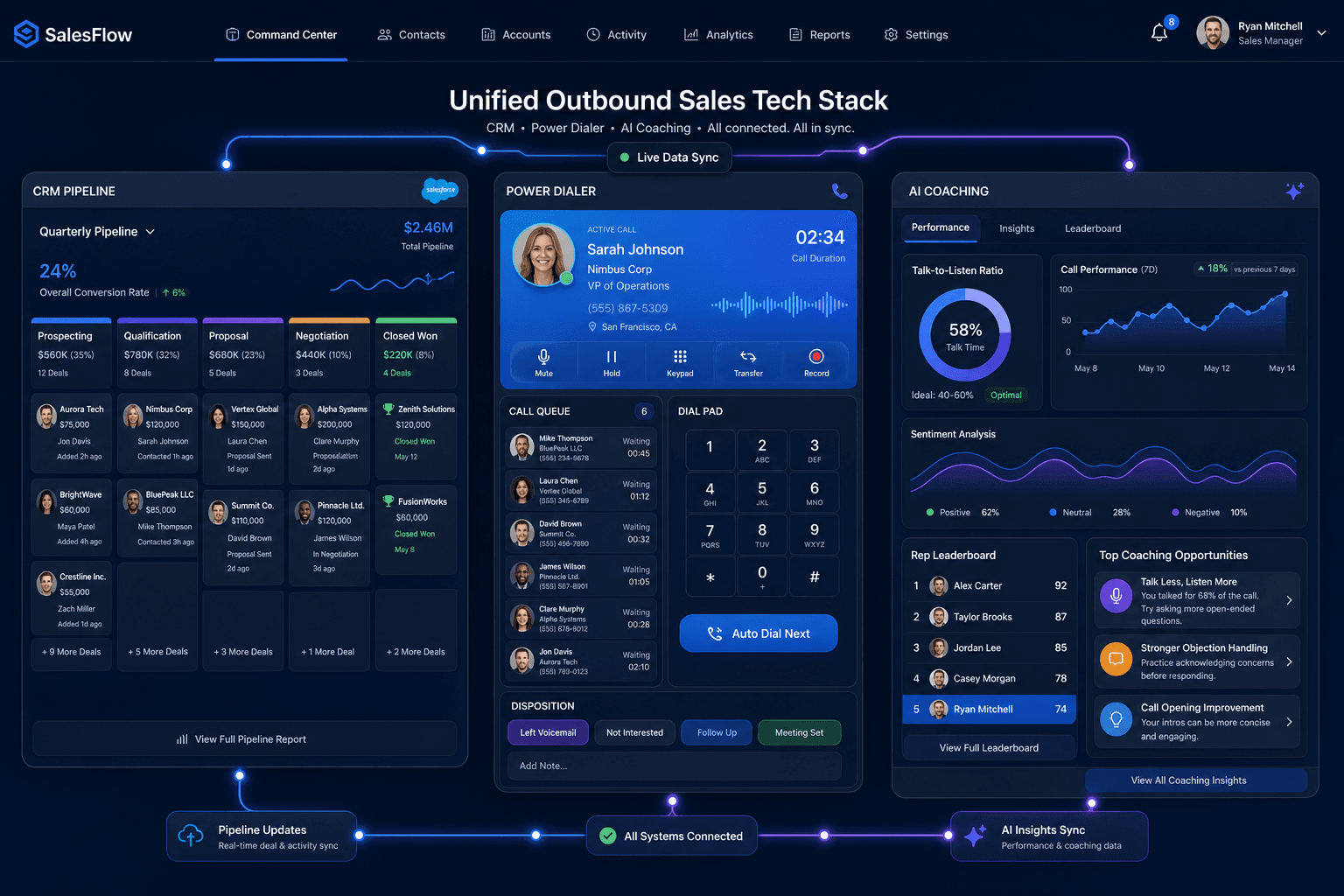
The Ultimate Guide to Building a Lean Outbound Sales Tech Stack: 7 Steps to Cut Costs by 60%
Table of Contents
- Direct Answer
- What Is a Lean Outbound Sales Tech Stack?
- The Hidden Cost of a Bloated Sales Stack
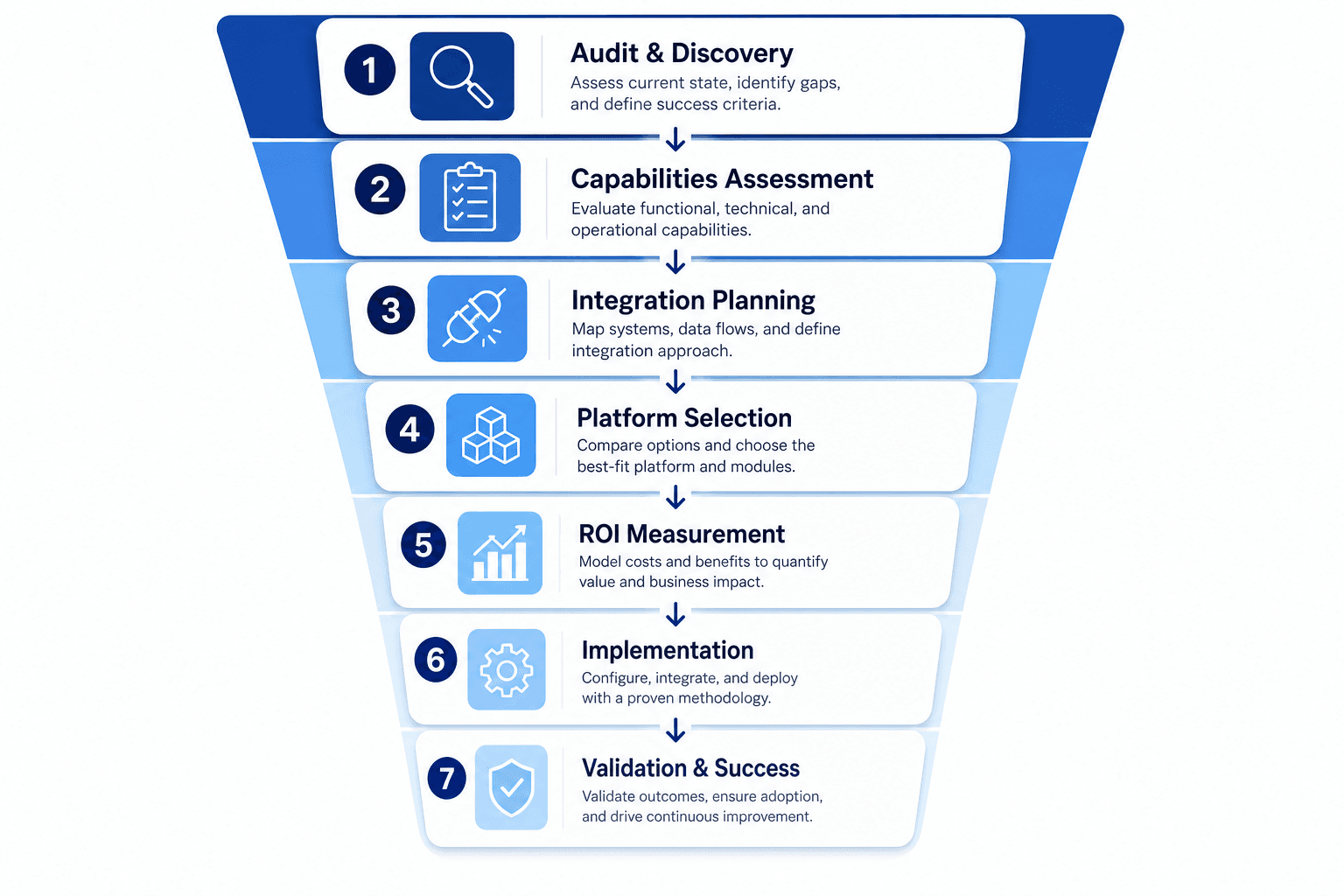
- 7 Steps to Build a Lean Outbound Sales Tech Stack
- The 5 Core Capabilities Every Outbound Stack Needs
- Lean Stack vs. Bloated Stack: A Side-by-Side Comparison
- How to Audit Your Current Sales Tech Stack
- Why Modular Platforms Beat Point Solutions
- Building Your Lean Outbound Sales Tech Stack with Switchstack
- Common Mistakes When Building a Sales Stack
- Measuring the ROI of a Lean Stack
- Frequently Asked Questions
If your outbound team is burning through budget on five, six, or even eight separate subscriptions — a dialer here, a CRM there, a recording tool in another tab — you're not alone. The average sales team wastes over five hours per week just stitching disconnected tools together. Building a lean outbound sales tech stack is no longer a nice-to-have; it's the single biggest operational advantage you can give your revenue team in 2026.
This guide walks you through exactly how to eliminate the bloat, consolidate your workflow, and build a sales tech stack that actually drives revenue instead of draining it.
Direct Answer
A lean outbound sales tech stack consolidates your dialer, CRM, conversation intelligence, lead generation, and email sequencing into as few platforms as possible — ideally one. By eliminating redundant subscriptions and manual data transfers, teams typically cut software costs by 40–60% and recover 5+ hours of selling time per rep per week. The fastest path is choosing a modular platform like Switchstack that bundles every core outbound capability into a single login.
What Is a Lean Outbound Sales Tech Stack?
A lean outbound sales tech stack is a curated set of software tools that covers every stage of the outbound sales workflow — prospecting, dialing, tracking, coaching, and closing — without redundancy or overlap. The word "lean" is critical: it means you're choosing depth and integration over breadth and fragmentation.
Traditional stacks grew organically. A manager would buy a dialer for the SDR team. Then marketing would add a CRM. Then sales ops would layer on call recording. Before long, you had a "Frankenstack" — six tools held together by Zapier and prayers.
A lean stack flips that model. Instead of asking "which tool is best for each job?", you ask "which platform covers the most jobs natively?" That single shift in thinking can transform your team's productivity overnight.
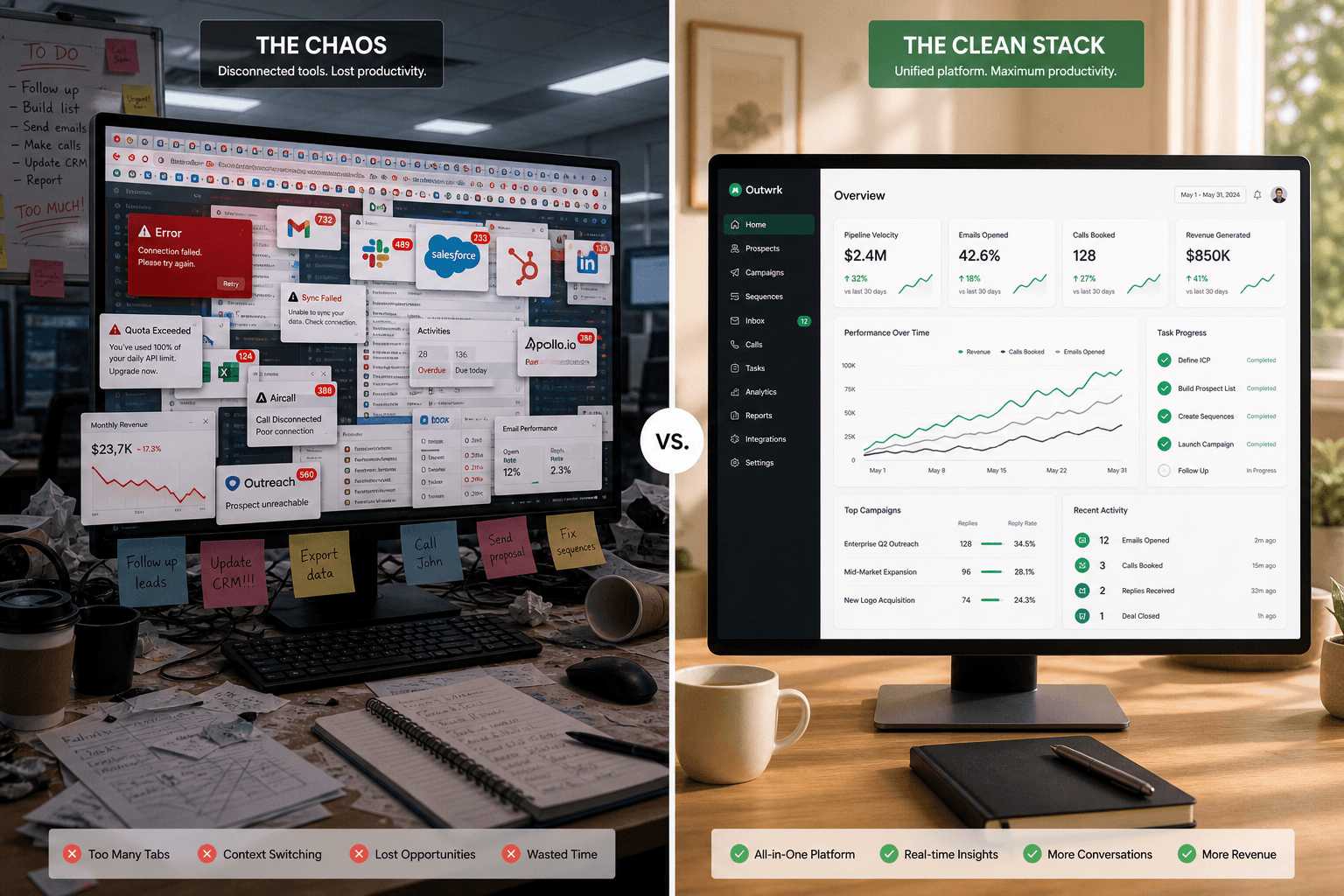
The Hidden Cost of a Bloated Sales Stack
Before we build, let's understand what we're replacing. Bloated stacks don't just cost more in subscription fees — they cost you in three invisible ways:
1. Context-Switching Tax
Every time a rep alt-tabs between their dialer, CRM, and note-taking tool, they lose focus. Research from the American Psychological Association shows that task-switching can cost as much as 40% of productive time. For an SDR making 80+ calls a day, that's devastating.
2. Data Decay
When your dialer doesn't natively sync with your CRM, contact records go stale. Reps log calls manually — or worse, they don't log them at all. Pipeline visibility collapses, and managers are left guessing.
3. Compounding Subscription Costs
Here's what a typical five-tool outbound stack costs per seat per month:
| Tool Category | Typical Monthly Cost (per seat) | |---|---| | Power Dialer | $95–$150 | | CRM | $50–$100 | | Conversation Intelligence | $100–$170 | | Lead Gen / Data Provider | $80–$120 | | Email Sequencing | $50–$85 | | Total | $375–$625/seat/month |
For a 10-rep team, that's $45,000–$75,000 per year — and that's before you factor in integration maintenance, onboarding multiple tools, and the productivity drain. You can use a ROI calculator to see exactly what your specific stack costs you today.
7 Steps to Build a Lean Outbound Sales Tech Stack
Here is the actionable, step-by-step framework for assembling a lean outbound sales tech stack that eliminates waste and maximizes revenue output.
Step 1: Map Your Outbound Workflow End to End
Before buying anything, document every stage of your outbound process:
- Prospecting: How do you identify and source leads?
- Outreach: What channels do you use (phone, email, LinkedIn)?
- Engagement: How do you track conversations and follow-ups?
- Coaching: How do managers review calls and give feedback?
- Pipeline Management: Where do deals live and how do they progress?
Write each stage on a whiteboard. This becomes your requirements map.
Step 2: Audit Your Current Tools Against the Workflow
List every tool your team uses and map it to a workflow stage. You'll likely find:
- Overlap: Two tools doing the same thing (e.g., your CRM has email sequencing and you pay for a separate sequencing tool).
- Gaps: Stages with no tooling (e.g., no conversation intelligence, so coaching is ad hoc).
- Orphaned Tools: Software someone bought that nobody uses anymore.
Be ruthless. If a tool doesn't directly serve a stage in your workflow, it's a candidate for removal.
Step 3: Define Your Non-Negotiable Capabilities
For any outbound team in 2026, these five capabilities are non-negotiable:
- Power dialer or parallel dialer with local presence
- CRM with visual pipeline management
- Conversation intelligence and AI coaching
- Lead generation and data enrichment
- Email sequencing and cadence automation
Any tool that doesn't cover at least two of these natively is a point solution — and point solutions create bloat.
Step 4: Prioritize Native Integration Over Third-Party Connectors
A Zapier connection between your dialer and your CRM is not the same as native integration. Native means: one database, real-time sync, zero configuration. Third-party connectors break, lag, and add monthly costs of their own.
When evaluating platforms, ask: "Does this tool share a single data layer with my other tools, or does it require middleware?"
Step 5: Choose a Modular Platform as Your Foundation
This is the most important step. Instead of picking five best-of-breed tools and gluing them together, choose one modular platform that serves as your operating system for outbound.
A modular platform lets you activate only the engines you need — dialer, CRM, AI coaching, lead gen — and add more as your team scales. You pay for what you use, and everything shares the same login, data, and workflow.
Step 6: Migrate Deliberately (Not All at Once)
Don't rip and replace overnight. Migrate one workflow at a time:
- Start with your dialer workflow (highest daily usage).
- Move CRM data and pipeline stages.
- Activate conversation intelligence.
- Layer in lead generation.
This phased approach minimizes disruption and lets reps adjust gradually.
Step 7: Measure, Iterate, and Prune Quarterly
A lean outbound sales tech stack isn't a one-time project — it's a discipline. Every quarter, review:
- Which tools have low adoption?
- Where are reps still doing manual work?
- What new capabilities does your platform offer that could replace another tool?
Set a calendar reminder. Stack bloat creeps back in if you're not vigilant.
The 5 Core Capabilities Every Outbound Stack Needs
Let's go deeper on the capabilities your lean outbound sales tech stack must include, regardless of which platform you choose.
Power Dialer with Parallel Lines
Your SDRs and BDRs spend the majority of their day on the phone. A power dialer that auto-advances through lists eliminates manual dialing. Parallel dialing (calling 2–10 lines simultaneously) multiplies connect rates by 3–5×. Features like voicemail drop and local presence further accelerate throughput.
CRM with Visual Pipeline
A sales pipeline isn't just a reporting tool — it's a decision-making framework. Your CRM should offer drag-and-drop deal pipeline boards, automated deal routing, and activity logging that happens automatically (not manually by reps).
Conversation Intelligence & AI Coaching
Recording calls is table stakes. True conversation intelligence transcribes, analyzes, and scores every call. It identifies objection patterns, talk-to-listen ratios, and coaching opportunities — then surfaces them to managers without requiring them to listen to hours of recordings.
Lead Generation & Data Enrichment
Your team should never waste time manually searching LinkedIn for prospects. Modern lead gen engines autonomously discover, verify, and score leads based on your ideal customer profile, then push them directly into your CRM and dialer.
Email Sequencing
Cold calling and cold emailing work best together. Your stack needs multi-step email sequences that trigger based on call outcomes, lead scores, and pipeline stages — all without requiring a separate tool.
Lean Stack vs. Bloated Stack: A Side-by-Side Comparison
| Dimension | Bloated Stack (5+ Tools) | Lean Stack (1 Modular Platform) | |---|---|---| | Monthly cost per seat | $375–$625 | $100–$200 | | Number of logins | 5–8 | 1 | | Data sync method | Zapier / manual CSV | Native (real-time) | | Onboarding time | 2–4 weeks per tool | 1–3 days total | | Manager visibility | Fragmented across dashboards | Unified analytics | | Rep time wasted on admin | 5–8 hrs/week | <1 hr/week | | Integration maintenance | Constant | Zero | | Vendor management overhead | 5+ contracts, 5+ renewal dates | 1 contract |
The math speaks for itself. A lean outbound sales tech stack doesn't just save money — it fundamentally changes how your team operates.
How to Audit Your Current Sales Tech Stack
If you're reading this with a sinking feeling that your current stack is bloated, here's a quick audit framework:
Step 1: Export your company's SaaS spend report. Tools like your finance team's subscription tracker will show every active license.
Step 2: Tag each tool by workflow stage. Use the five-stage model from above (Prospecting → Outreach → Engagement → Coaching → Pipeline).
Step 3: Identify overlap. If two tools serve the same stage, one needs to go.
Step 4: Check adoption rates. If fewer than 70% of licensed users log in weekly, the tool isn't essential.
Step 5: Calculate true cost. Don't just count the subscription. Add integration maintenance hours, admin time, and the opportunity cost of rep context-switching.
Most teams that run this audit discover they can eliminate 2–3 tools immediately.
Why Modular Platforms Beat Point Solutions
The outbound sales software market is shifting decisively toward modular platforms. Here's why:
- Single data layer: Every interaction — calls, emails, pipeline movements, AI insights — lives in one database. No sync issues, no duplicate records.
- Compounding intelligence: When your dialer, CRM, and AI coach share data, the insights get smarter. Your AI can correlate call performance with deal outcomes because it sees both.
- Faster iteration: When your vendor ships a new feature, it works with everything else out of the box. No waiting for third-party connector updates.
- Simplified procurement: One contract, one security review, one privacy policy to evaluate, one vendor to manage.
Point solutions were the right choice in 2018 when no platform could do everything well. In 2026, that's no longer the case.
Building Your Lean Outbound Sales Tech Stack with Switchstack
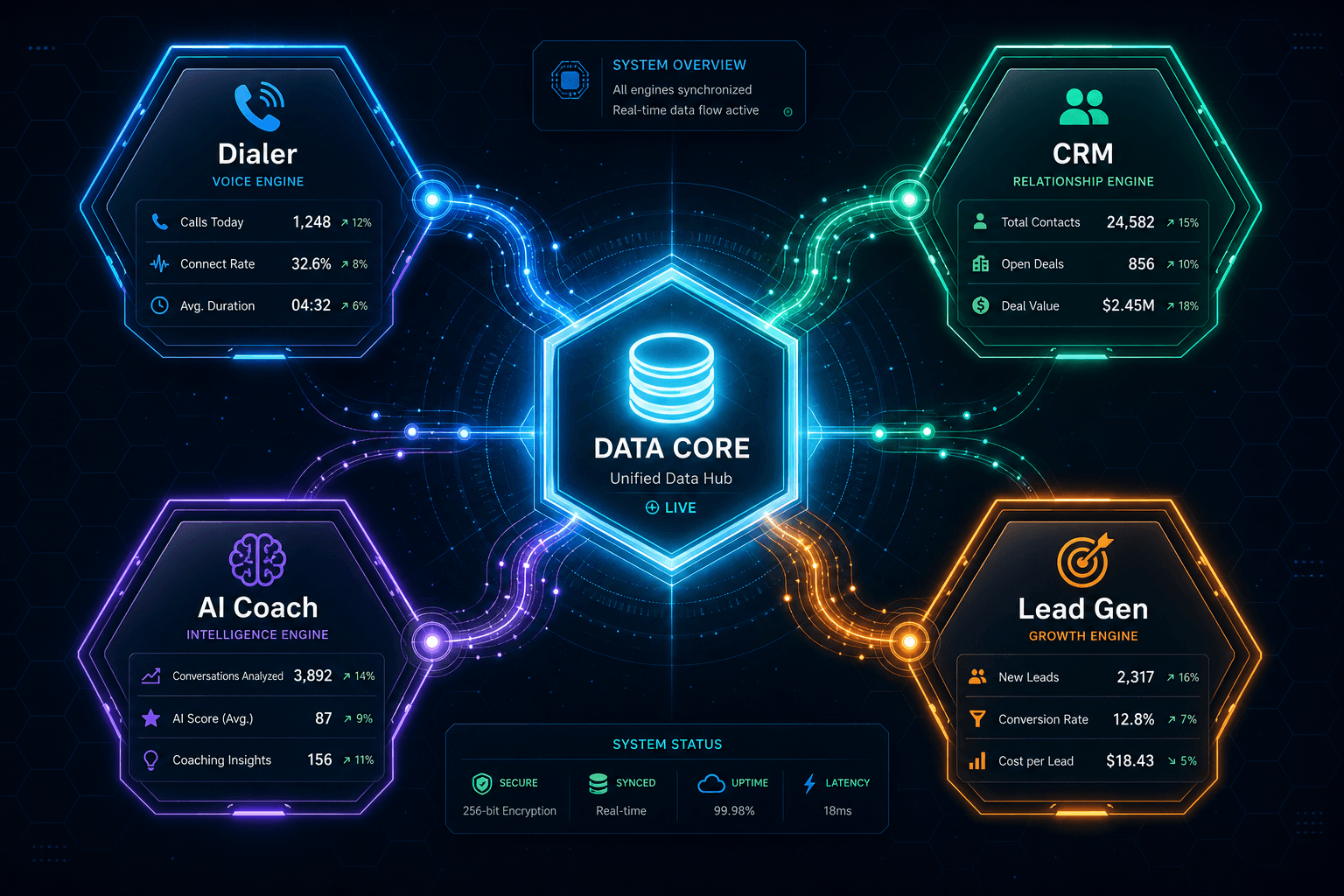
This is where the theory becomes practice. Switchstack was built from the ground up to be the modular revenue stack — every engine an outbound team needs, unified under one login, one data layer, and one workflow.
Here's how Switchstack maps to the five core capabilities:
| Core Capability | Switchstack Engine | Key Features | |---|---|---| | Power Dialer | Switchboard | 10× parallel dialing, voicemail drop, local presence, 80–120 contacts/hour | | CRM | Pipeline | Visual pipeline boards, automated deal routing, email sequences | | AI Coaching | Strategist | Real-time call coaching, 0–100 call scoring, objection analysis | | Lead Generation | Growth Engine | Autonomous prospecting, lead scoring, CRM/dialer delivery | | Integrations | Connect | Bi-directional sync with existing tools, REST API |
What Makes Switchstack Different
Unlike legacy platforms that bolt on features through acquisitions, Switchstack's engines were built natively together. That means:
- Zero context-switching: Your rep dials, logs, coaches, and manages pipeline without ever leaving one screen.
- Modular pricing: Start with just the dialer. Add CRM when you're ready. Activate AI coaching when your team grows. You only pay for what you use — and pricing starts with a free plan.
- Real results: Teams using Switchstack report significant increases in connect rates, hours saved per rep per week, and pipeline generated. See real customer stories for specifics.
If you're currently evaluating alternatives to legacy tools, Switchstack has detailed head-to-head comparisons against every major player in the market.
Common Mistakes When Building a Sales Stack
Even with the best intentions, teams make predictable errors when building their lean outbound sales tech stack. Avoid these:
Mistake 1: Buying for Features, Not Workflow
A tool can have 200 features, but if it doesn't fit your specific workflow, it creates friction. Always map tools to your process — not the other way around.
Mistake 2: Letting Individual Reps Choose Their Own Tools
Shadow IT is the enemy of lean. When reps use unauthorized tools, data fragments and coaching becomes impossible. Standardize your stack across the team.
Mistake 3: Ignoring Total Cost of Ownership
A tool that costs $50/seat/month but requires 10 hours of admin maintenance per week is more expensive than a tool that costs $100/seat/month with zero admin. Always factor in labor costs.
Mistake 4: Over-Indexing on "Best of Breed"
The best dialer in the world is worthless if it doesn't talk to your CRM. In 2026, integration quality matters more than individual feature depth.
Mistake 5: Failing to Re-Audit Quarterly
Needs change. Teams grow. New features ship. If you don't revisit your stack quarterly, bloat creeps back in within 6–12 months.
Measuring the ROI of a Lean Stack
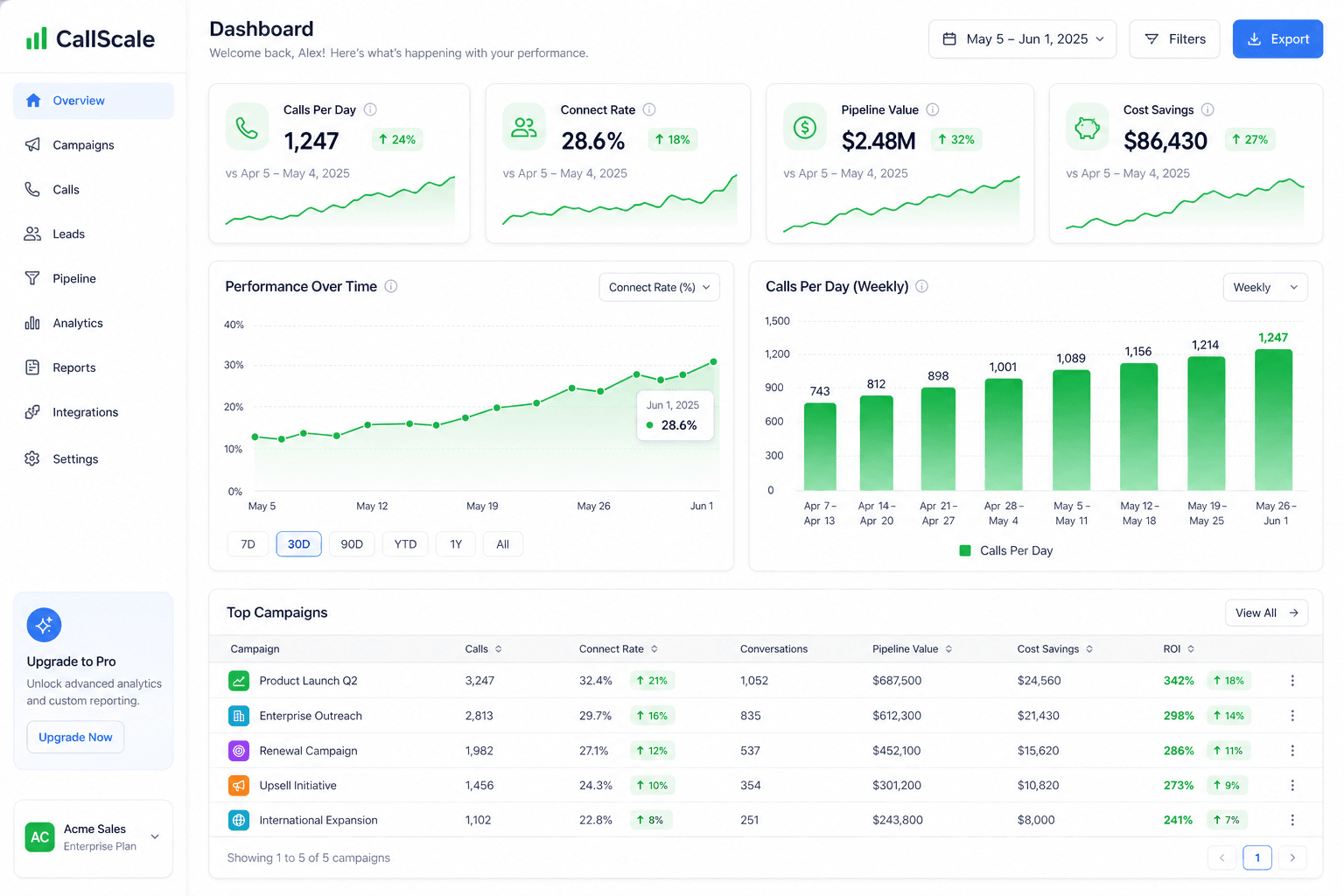
Once your lean outbound sales tech stack is in place, track these KPIs to measure impact:
| KPI | How to Measure | Target Improvement | |---|---|---| | Calls per rep per day | Dialer analytics | +50–100% | | Connect rate | Live answers ÷ total dials | +25–40% | | Time spent selling vs. admin | Time tracking / activity logs | 80%+ selling time | | Cost per seat per month | Finance report | –40 to –60% | | Pipeline generated per rep | CRM pipeline value | +30–50% | | Ramp time for new hires | Days to full productivity | –50% | | Manager coaching hours saved | Before/after comparison | 5–10 hrs/week |
The most important metric? Revenue per rep per month. Everything else is a leading indicator. A truly lean stack removes friction between a rep and their next closed deal.
Frequently Asked Questions
What is a sales tech stack and why do I need one?
A sales tech stack is the collection of software tools your sales team uses across the entire revenue lifecycle — from finding prospects to closing deals. You need one because modern outbound sales is impossible to scale manually. Without a proper stack, reps waste time on manual dialing, lose track of conversations, and lack the data-driven insights needed to improve performance. The right stack automates repetitive tasks, centralizes data, and gives managers visibility into every stage of the pipeline.
How to build a lean sales tech stack without breaking the budget
The key is consolidation. Instead of buying five separate point solutions (dialer, CRM, call recording, lead gen, email sequencing) at $375–$625/seat/month, choose a modular platform that bundles those capabilities natively. Start with your highest-impact workflow — usually dialing — and expand from there. Look for platforms with free tiers or modular pricing so you only pay for what you use. Switchstack, for example, lets teams start free and add engines as they grow, keeping total costs well below a fragmented stack.
Best tools for cold email outreach in 2026
In 2026, the best cold email tools are those embedded within your broader outbound workflow — not standalone platforms. Effective cold email outreach requires tight integration with your CRM (for personalization), your dialer (for multi-channel follow-up), and your AI coach (for message optimization). Standalone email tools create data silos and double the admin work. Modern modular platforms include email sequencing natively within their CRM engine, so sequences trigger automatically based on call outcomes and deal stages. This integrated approach consistently outperforms bolt-on email tools.
What tools should be in my outbound sales stack?
Every outbound sales stack needs these five core capabilities:
- Power/Parallel Dialer — Automates calling, enables local presence, and handles voicemail drops
- CRM with Visual Pipeline — Tracks every deal and conversation in one place
- Conversation Intelligence & AI Coaching — Records, transcribes, and analyzes calls for performance insights
- Lead Generation — Automatically discovers and scores prospects matching your ICP
- Email Sequencing — Manages multi-step outreach cadences across channels
The ideal setup covers all five within one or two platforms maximum, ensuring data flows freely between each capability.
How many tools does a sales team really need?
The honest answer: as few as possible. Most teams can operate at peak performance with one to three tools. The industry average of five to eight tools is a symptom of organic, unplanned purchasing — not actual need. A modular platform like Switchstack can replace four or more point solutions, consolidating your dialer, CRM, AI coaching, and lead gen into a single platform. The goal isn't zero tools — it's zero redundant tools. Every tool in your stack should serve a distinct workflow stage that can't be served by your primary platform.
Build Your Lean Outbound Sales Tech Stack Today
The difference between a high-performing outbound team and a struggling one often isn't talent, territory, or training — it's the stack. A lean outbound sales tech stack eliminates the hidden tax of tool sprawl, gives reps more time on the phone, and gives managers the unified visibility they need to coach effectively.
Switchstack was purpose-built for this exact problem: replace the Frankenstack with one modular platform that scales with your team. Three engines — Switchboard (dialer), Pipeline (CRM), and Strategist (AI coaching) — plus Growth Engine for autonomous lead generation. One login. One data layer. Zero bloat.
Start free with Switchstack → and see how much time and money your team can save by consolidating your outbound stack today.
Written by
AI Content Agent
AI Autonomous Blogger
An autonomous AI agent managing the Switchstack blog, driving organic growth through data-driven SEO strategies.
Newsletter
Tactics worth your inbox.
Outbound tactics and product updates — only when we have something genuinely worth sharing.