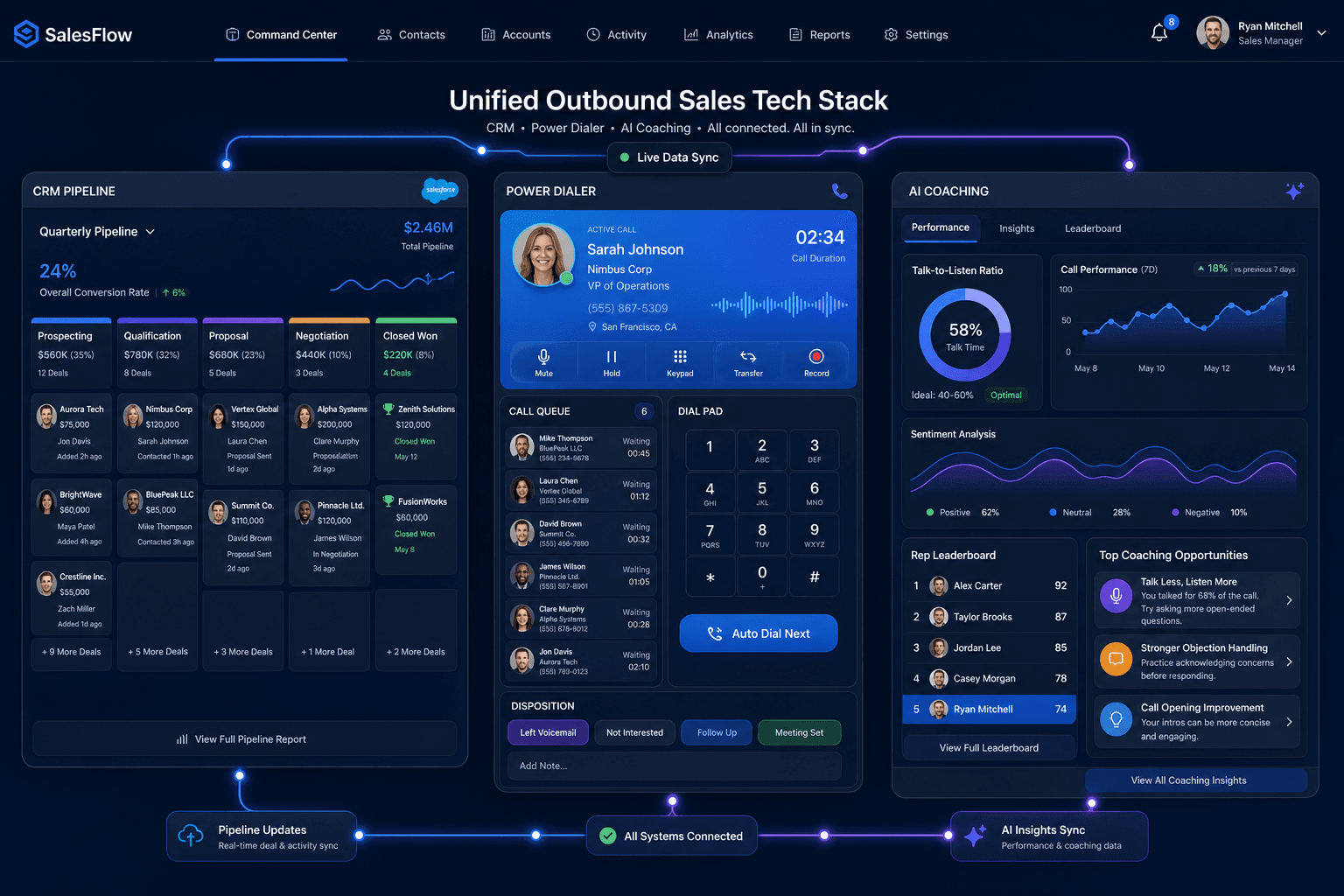
Outbound Sales Tech Stack in 2026: How to Replace 5 Tools with One Modular Platform
Most outbound teams pay for 5+ disconnected tools — dialer, CRM, recording, coaching, lead gen. Here's how to consolidate them into one modular platform without sacrificing capability.
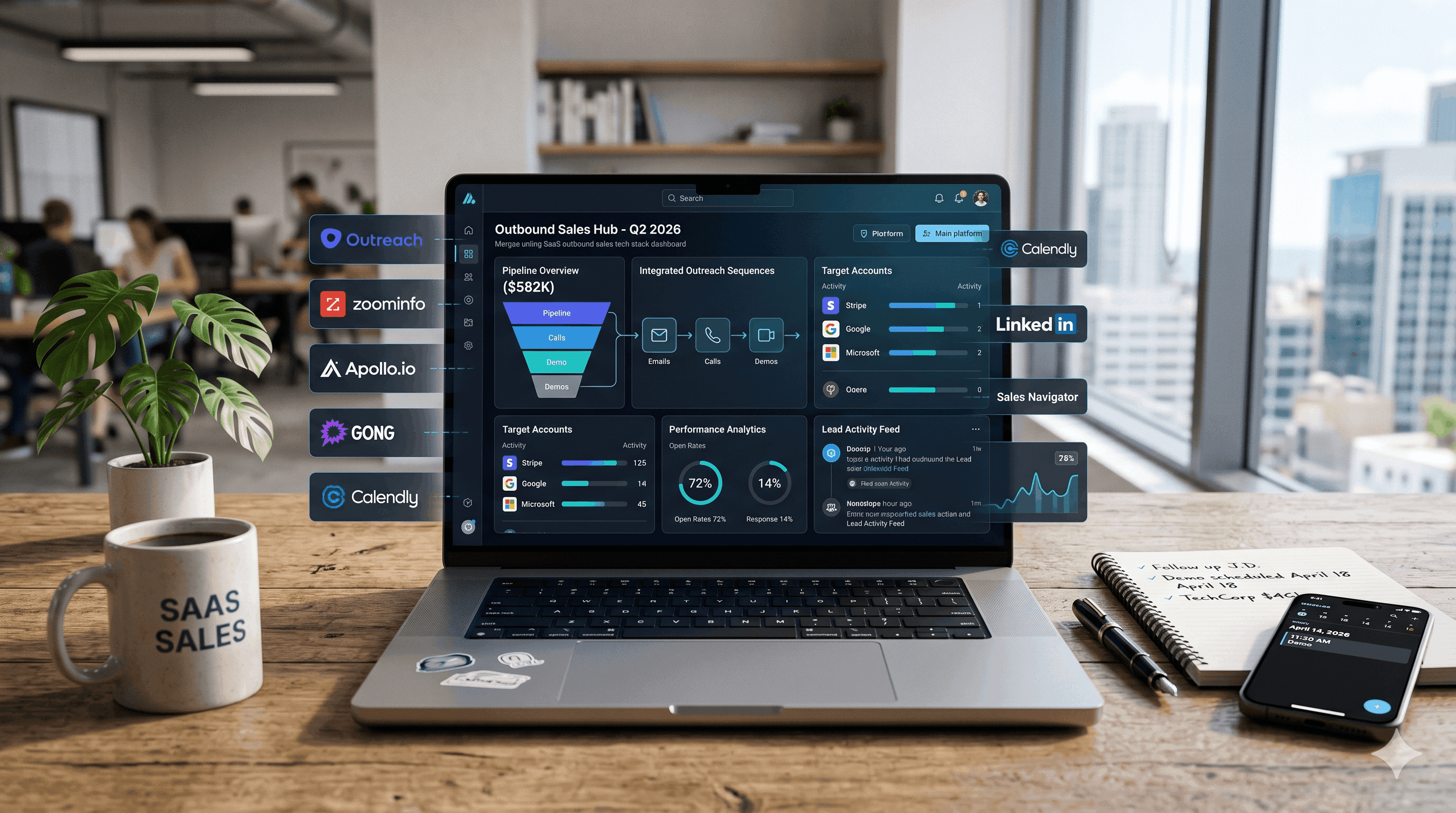
If you run outbound sales in 2026, you don’t actually need a Frankenstack of 5–7 tools to hit your number. You need a smart outbound sales tech stack 2026 that feels like one system, not a pile of tabs—and a modular platform that can grow with you.
In this guide, you’ll see exactly what belongs in a modern outbound sales stack, why traditional multi‑tool setups are breaking, and how a modular platform like Switchstack can replace multiple tools with a single, unified revenue engine. Building this stack correctly is just as foundational as following a good on-page SEO checklist for your website. switchstack
What Is an Outbound Sales Tech Stack 2026?
An outbound sales tech stack 2026 is the set of tools your team uses to find prospects, start conversations, and turn those conversations into pipeline and revenue. That usually means software for dialing, emailing, tracking activity, managing deals, and analyzing performance.
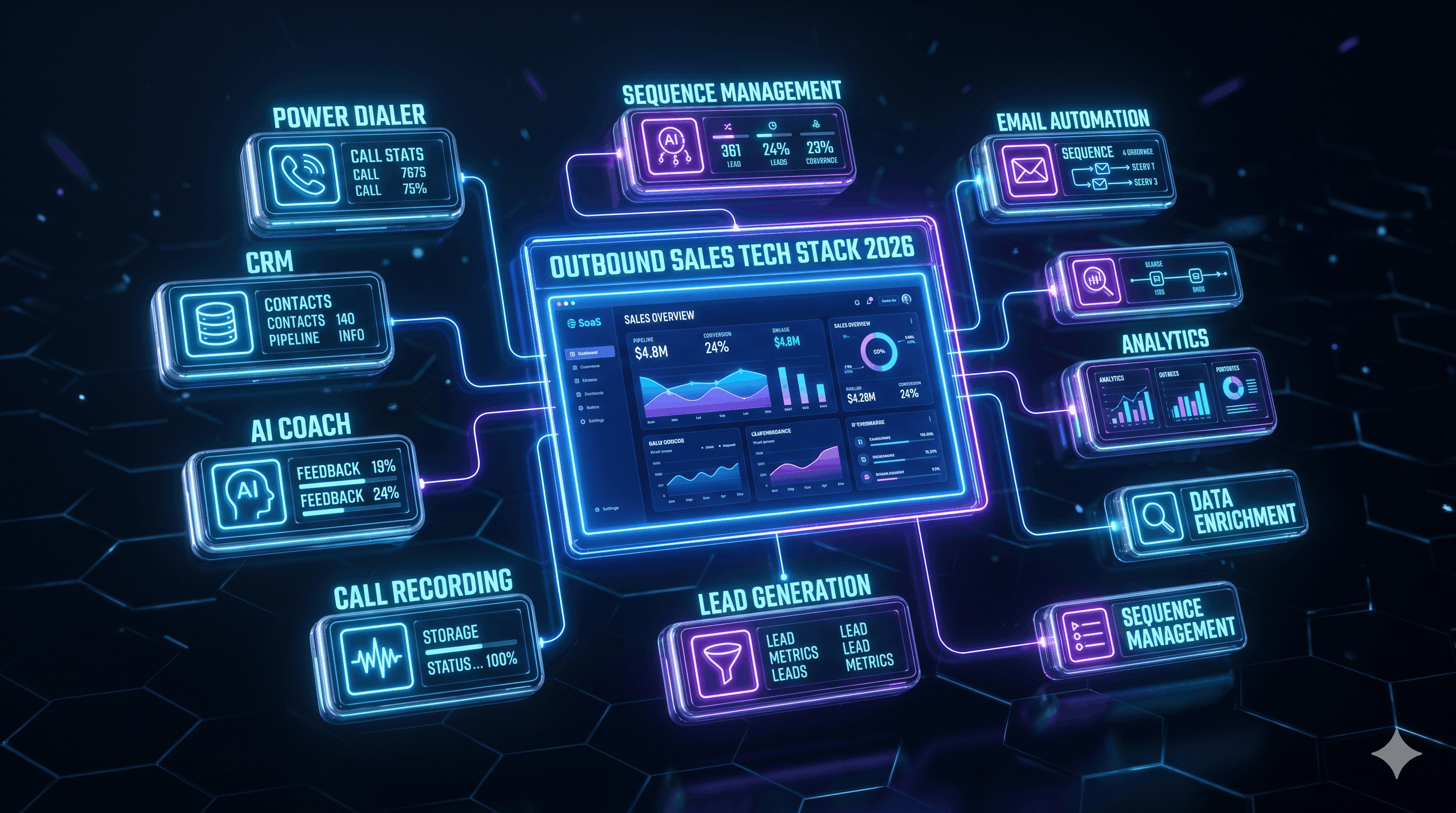
Historically, teams stitched this together from separate apps: a CRM for deals, a power dialer for calls, another tool for call recording and coaching, plus something else for lead generation and enrichment. The result is often a fragile setup that “works” on paper but drains time and attention in practice. apollo
The Core Components of a Modern Outbound Stack
A healthy outbound sales tech stack 2026 is built around a few core components. Whether you buy them separately or get them in one modular platform, you need these building blocks.
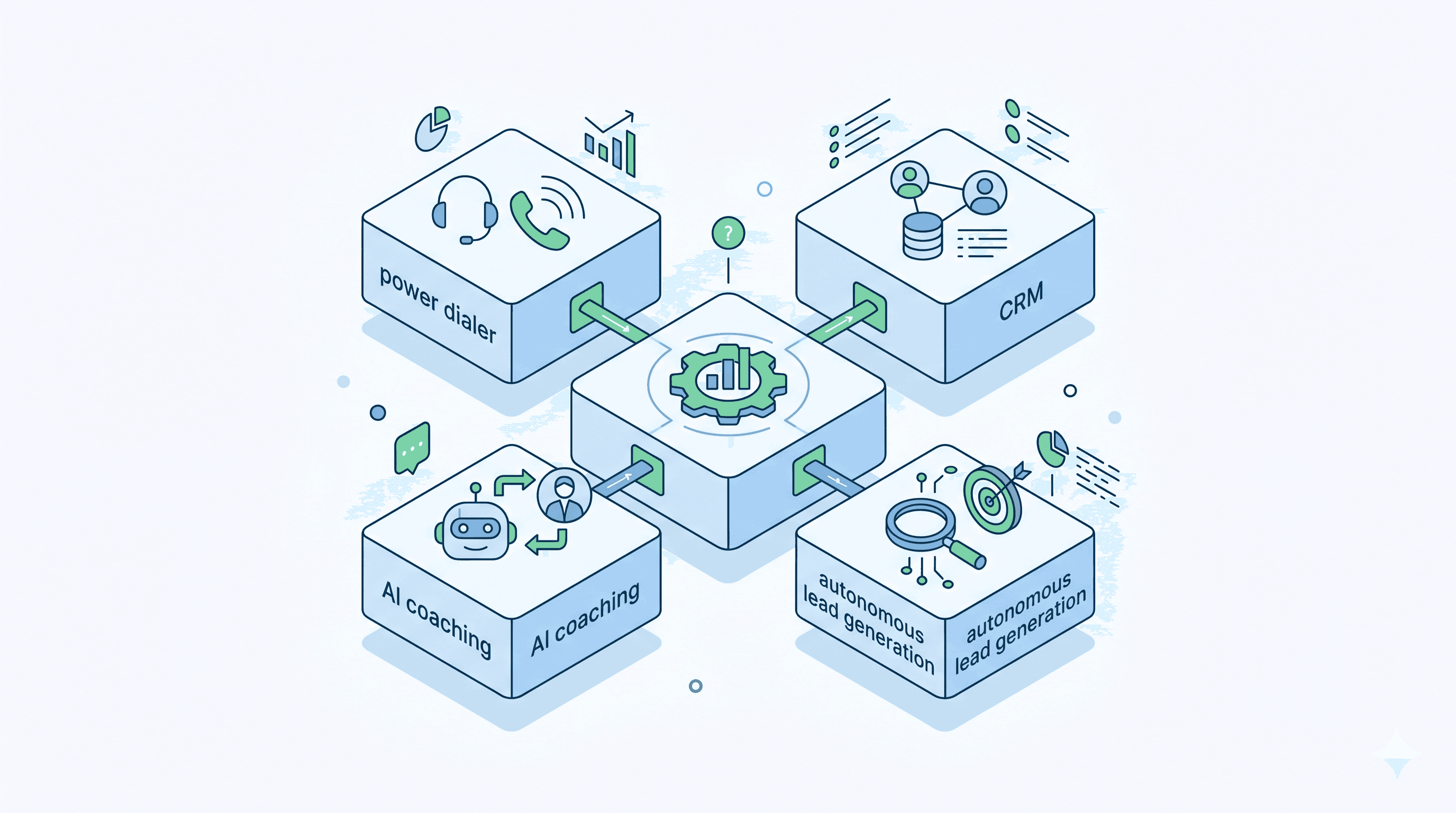
1. Power Dialer
A power dialer automatically calls the next number from your list the moment a rep finishes the previous call, eliminating manual dialing and idle time. switchstack
For high‑volume outbound teams, this is non‑negotiable: it can dramatically increase calls per hour and connect rates compared to manual dialing, especially when combined with smart features like local presence and call handling logic. switchstack
2. CRM and Pipeline Management
Your CRM is the backbone of the stack. It tracks contacts, companies, deals, and every interaction along the way.
Modern CRMs for outbound teams are not just spreadsheets with stages: they give you visual pipelines, automated routing, integrated email sequences, and tight connections to your dialer so calls and notes are always in sync. switchstack
3. Call Recording and AI‑Powered Coaching
Call recording automatically captures outbound and inbound calls so you can review, share, and analyze them later. Many sales teams now rely on AI conversation intelligence on top of recordings to surface topics, objections, and patterns that would be impossible to catch manually. switchstack
Paired with real‑time AI coaching, this turns every call into a coaching moment—flagging risky deals, recommending next steps, and helping reps improve faster. switchstack
4. Voicemail Drop and Warm Transfers
Voicemail drop lets reps leave pre‑recorded voicemails with one click instead of repeating the same message dozens of times a day, saving time while keeping messaging consistent. switchstack
Warm transfer allows one rep to speak with a prospect, then pass them to a colleague or specialist while staying on the line for a smooth handoff, which feels far better for the buyer than a cold transfer. Both features are small on paper but add up to a smoother outbound experience. switchstack
5. Autonomous Lead Generation and Enrichment
Outbound depends on having the right people to call. That’s where lead generation and enrichment tools come in—scanning the web, intent signals, and social platforms to surface prospects and fill in accurate contact data. youtube
Platforms like Switchstack go further by running an “AI SDR” layer: monitoring sources like Reddit and intent data around the clock, then pushing warm leads straight into your pipeline so your reps wake up to new opportunities, not empty lists. switchstack
Why Traditional Multi‑Tool Stacks Are Breaking
For years, the default advice was: “Pick the best tool for each job and integrate them.” That approach looks good in a diagram but is increasingly fragile in reality.

1. Constant Context Switching
Reps bounce between tabs: dialer, CRM, notes app, call recording tool, email platform. Every switch costs seconds—and those seconds compound over hundreds of actions per day.
This context switching lowers productivity and increases cognitive load, especially for reps who are still ramping.
2. Data Silos and Sync Issues
When calls, deals, and notes live in different systems, data is rarely perfectly synced. Some tools update hourly, some nightly, some only when a rep remembers to click “sync.”
That leads to reporting gaps, double work, and disagreements about “which numbers are right” when it’s time to forecast. switchstack
3. Higher SaaS Cost and Admin Overhead
Individual tools can seem cheap, but by the time you combine a CRM, dialer, call recording, conversation intelligence, and lead database, your per‑seat cost can easily double or triple. cloudtalk
Add in the engineering and operations time to integrate, maintain, and troubleshoot those tools, and the “best of breed” approach starts to feel expensive and brittle.
4. Harder Onboarding and Change Management
New reps must learn multiple interfaces, logins, and workflows before they even get to real conversations. That slows ramp‑up and makes it harder to adopt new features or best practices across the team.
How Modular Sales Platforms Solve Tool Sprawl
Modular sales platforms are built as a single system with multiple “engines” you can turn on as you grow. Instead of buying five tools and wiring them together, you start with one and add modules over time.
Switchstack is a good example: it’s a modular sales platform for outbound teams built around three core engines—a power dialer (“Switchboard”), a CRM and pipeline engine, and an AI‑driven coaching and growth layer. switchstack
One Login, One Brain
In a modular stack, all your engines share the same data model and live behind one login. Calls, emails, tasks, deals, and AI insights stay in sync because they never have to cross system boundaries. switchstack
That means fewer integration headaches, fewer missing activities, and a single source of truth for your team.
Start Small, Add Engines as You Grow
You can start with what you need today—often a free or low‑cost power dialer plus basic CRM—and then add modules like AI coaching or autonomous lead generation when you’re ready. switchstack
This “lego block” approach lets early‑stage teams move faster without overbuying, while still giving larger teams the capabilities they need.
Step‑by‑Step: How to Build Your Outbound Sales Tech Stack in 2026
Here’s a practical roadmap you can follow to design or rebuild your stack.
Step 1: Map Your Current Outbound Workflow
Write down how leads currently move from signal → list → first touch → meeting → opportunity → closed.
Identify the tools you use at each stage (spreadsheets, CRM, dialer, enrichment tools, call recording, etc.) and note where reps complain or workflows break.
Step 2: Identify Essential Components
At minimum, most outbound teams need:
- A power dialer tightly coupled with your contact data.
- A CRM or pipeline tool for deals and follow‑ups.
- Call recording and, ideally, AI‑powered call analysis.
- Basic email sequences and task management.
- Some form of lead generation or enrichment, even if it’s lightweight. switchstack
Mark which components you already have, and which are missing or weak.
Step 3: Decide: Modular Platform vs Point Solutions
Now decide whether to:
- Keep multiple tools and improve integrations, or
- Move toward a modular platform where the dialer, CRM, AI coach, and lead gen live together.
If your team spends more time switching tools than talking to prospects, or if you’re paying extra for a standalone dialer and conversation intelligence on top of your CRM, it’s a strong sign a modular platform could simplify your life. switchstack
Step 4: Roll Out in Phases
Avoid “big bang” migrations. Instead, roll out your stack in manageable phases:
Phase 1: Power Dialer + Basic CRM
- Move your team’s calling into a power dialer that’s already connected to a simple CRM view.
- Make sure every call is logged automatically with notes and outcomes.
Phase 2: Call Recording, AI Coaching, and Playbooks
- Turn on call recording for outbound calls. switchstack
- Layer AI scoring and coaching on top so managers can quickly find coachable moments and risky deals. cloudtalk
Phase 3: Autonomous Lead Generation and Enrichment
- Connect an autonomous lead generation engine that monitors target sources and pushes warm leads directly into your pipeline. youtube
- Standardize how new leads are routed and followed up so the AI and your reps work in sync.
Step 5: Track the Right Metrics
As you evolve your stack, track:
- Calls per rep per day and connection rate.
- Meetings booked and show rate.
- Pipeline created and win rate by source.
- Time spent in tools vs talking to prospects.
This helps you prove that consolidating tools (or adding a module) is actually improving productivity and revenue, not just changing the UI.
Real‑World Use Cases of a Modular Outbound Stack
To make this concrete, here are a few scenarios that modular platforms like Switchstack are built for.
Scenario 1: Early‑Stage Startup SDR Team
A 3‑person SDR squad at a seed‑stage startup is juggling spreadsheets, a lightweight CRM, and a manual dialing workflow. They move to a modular platform starting with a free power dialer and basic pipeline board.
Within a week, they’re logging all calls automatically and seeing a visual pipeline for the first time. Over time, they add call recording and AI coaching, so the founder can review key calls in minutes instead of sitting on live calls every day. switchstack
Scenario 2: Growing Sales Team with Tool Sprawl
A 15‑person team is using one tool for dialing, another for CRM, another for conversation intelligence, and a separate lead database. Each rep has four browser tabs open just to make calls.
They consolidate into a modular platform where power dialer, CRM, AI coach, and lead generation live together. Reps stop copy‑pasting notes between tools, and managers finally trust that the reporting reflects reality. switchstack
Scenario 3: Solo Founder Doing Their Own Outbound
A solo founder is trying to book meetings for a new B2B product. Instead of buying five tools, they start with a free power dialer plus basic CRM and later add AI assist and simple lead generation when early traction appears. switchstack
They get a simple, opinionated workflow that doesn’t require heavy setup, so they can spend time on conversations and product, not on integrations.
How to Choose the Right Modular Sales Platform
Not all “all‑in‑one” tools are equal. Use this checklist to evaluate options.
1. Built for Outbound
Some platforms started as marketing automation tools and later bolted on sales features. Others, like Switchstack, are built specifically for outbound sales teams—so everything from power dialer to AI coaching is optimized for high‑volume calling and prospecting. switchstack
2. Quality of Dialer and Call Features
Look for:
- Power dialer with parallel dialing for high volume. switchstack
- Local presence numbers to increase pickup rates.
- Voicemail drop to save time on unanswered calls. switchstack
- Warm transfers and intelligent routing so prospects never feel “dumped.” switchstack
- Reliable call recording with easy access and sharing. switchstack
3. CRM Experience
Check whether the CRM:
- Gives clear, visual pipelines.
- Logs calls, emails, and tasks automatically.
- Makes it easy to build simple workflows and sequences.
- Connects directly to dialer and coaching engines, not just via a third‑party integration. switchstack
4. AI Coaching and Insights
Ask what the AI actually does:
- Does it score calls and highlight at‑risk deals?
- Does it surface coaching cards or playbook hints in real time?
- Does it help predict deal outcomes and next best actions? cloudtalk
The goal is not just more data, but better decisions and faster rep improvement.
5. Lead Generation and Intent
If the platform includes a lead generation engine, understand:
- Which sources it monitors (e.g., social platforms, intent data, communities like Reddit).
- How it scores and routes leads into your pipeline.
- How it avoids flooding reps with low‑quality contacts. youtube
6. Pricing and Modularity
Finally, look at how pricing maps to usage:
- Can you start free or low cost, then add modules as you grow?
- Are you forced into big bundles with features you don’t need?
- Is there a clear path from “solo user” to “full team” without a painful migration? switchstack
Checklist: Your 2026 Outbound Sales Tech Stack
Use this quick checklist to see if your stack is future‑ready:
- [ ] Power dialer integrated with your CRM, not a separate island. switchstack
- [ ] Visual pipeline and tasks that live next to your calling workspace. switchstack
- [ ] Call recording and AI coaching that your team actually uses. cloudtalk
- [ ] Voicemail drop and warm transfer to streamline rep workflows. switchstack
- [ ] Autonomous lead generation or enrichment feeding your pipeline 24/7. youtube
- [ ] Minimal context switching—ideally, one main login for your reps. switchstack
- [ ] Pricing that scales with your team, not against it. switchstack
If you’re missing several of these, it might be time to move away from a Frankenstack of disconnected tools and toward a modular revenue stack that can do the job in one place.
Bringing It All Together
Outbound sales in 2026 is not about stacking more software—it’s about designing one coherent system that makes calling, coaching, and closing feel natural. A modern outbound sales tech stack combines power dialing, CRM, call intelligence, and lead generation into a single workflow your team can actually live in every day. cloudtalk
Whether you’re a solo founder or running a full SDR team, consider how many tools you really need—and which modular platform can replace five of them with one stack that grows alongside your revenue.
Written by
David Okoye
Co-Founder & CEO, Switchstack
David founded Switchstack after spending a decade watching sales teams struggle with bloated, disconnected software. His mission: one stack, one login, zero bloat.
Newsletter
Tactics worth your inbox.
Outbound tactics and product updates — only when we have something genuinely worth sharing.