Progressive Auto Dialer Programs: The Heart of a Modern Outbound Sales Tech Stack (2026 Guide)
If you’re building serious outbound in 2026, “click‑to‑call from a CRM” isn’t enough. Modern teams are using auto dialer programs—especially progressive dialer software...

If you’re building serious outbound in 2026, “click‑to‑call from a CRM” isn’t enough.
Modern teams are using auto dialer programs—especially progressive dialer software—to automate outbound, keep reps constantly in conversations, and plug neatly into a modern outbound sales tech stack instead of juggling five separate tools.
This guide shows you what auto dialer and progressive dialer software actually do, how they fit into your revenue stack, and the features you should demand if you want to dominate outbound this year.
What Are Auto Dialer Programs?
An auto dialer program (or automated dialer software) is a system that automatically dials phone numbers from a list and connects only answered calls to a live agent or a voice flow.
Instead of reps manually typing numbers and waiting through ringing, busy tones, and voicemails, auto dialer software:
- Pulls numbers from your CRM or uploaded lists.
- Dials them according to rules you configure.
- Detects whether the call was answered by a person, went to voicemail, or failed.
- Connects live calls to an agent and skips everything else.
This is why auto dialer programs for sales and telemarketing have become standard in call centers and inside‑sales teams: they convert idle time into talk time at scale.
Types of Dialer Software (And Where Progressive Fits)
When people search for types of dialer software, they’re usually comparing four main modes: preview, power, predictive, and progressive dialers.
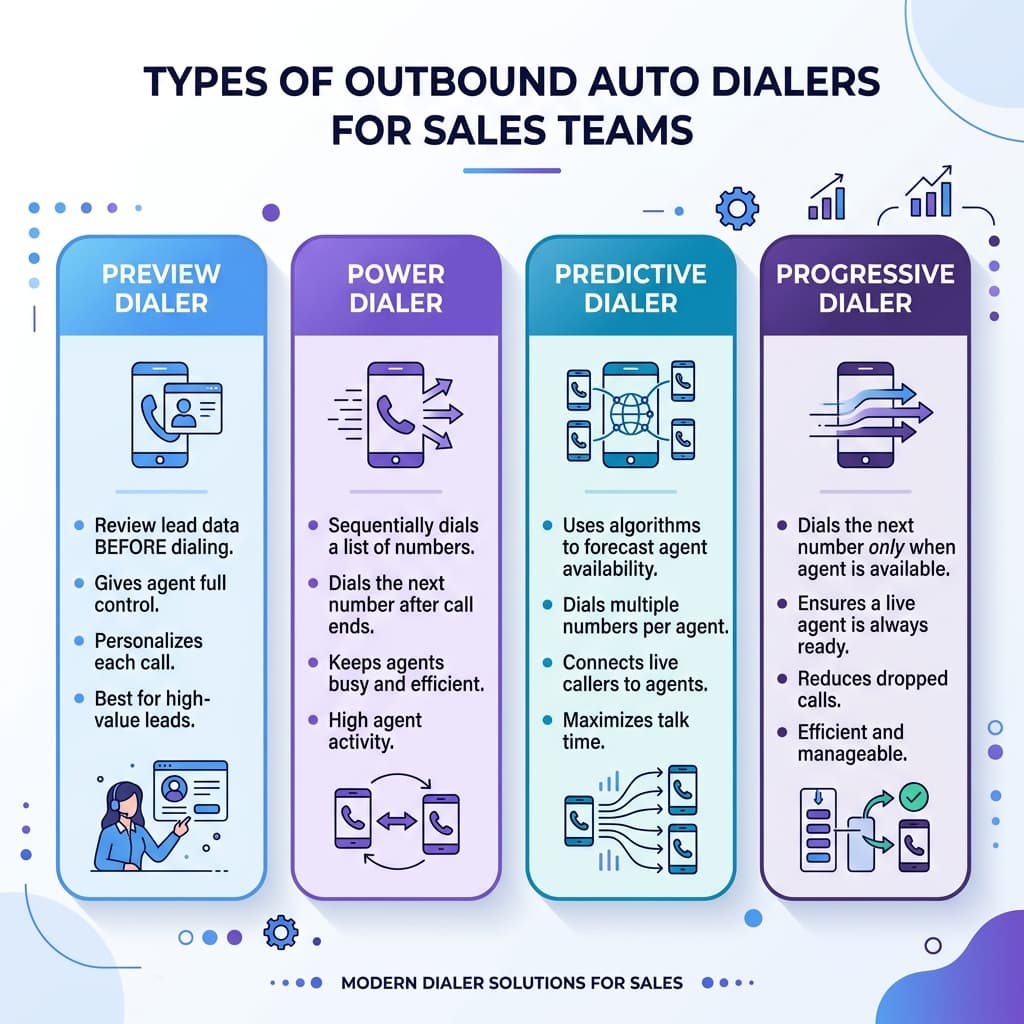
Preview Dialer
- Shows the next contact and their details before placing the call.
- Agent decides when (or whether) to dial.
- Best for high‑value, complex B2B calls where prep matters.
Power Dialer
- Automatically dials the next number for each available agent as soon as the previous call ends.
- Maximizes calls per hour but gives agents less control over which contact comes next.
- Great for scripted, high‑volume outbound campaigns.
Predictive Dialer
- Dials multiple numbers per agent and uses pacing algorithms to connect live answers just as an agent becomes free.
- Designed for large, high‑volume contact centers where efficiency and cost per call matter more than personalization.
Progressive Dialer (The “Balanced” Auto Dialer)
A progressive dialer is a type of auto dialer that automatically dials one number per available agent—but only when that agent is ready, with a moment to review the contact record first.
Key characteristics:
- One call per available agent (no over‑dialing).
- Skips busy signals, disconnected numbers, and voicemails using call‑progress detection.
- Gives agents the customer info on screen right before the call, so they can personalize and stay compliant.
Progressive dialer software is ideal when you want quality plus scale—for example, outbound sales teams working warm lists, demos, or higher‑value deals.
Features of a Progressive Dialer (What to Demand in 2026)
To rank for “features of a progressive dialer” and similar queries, you need clear, feature‑level detail.
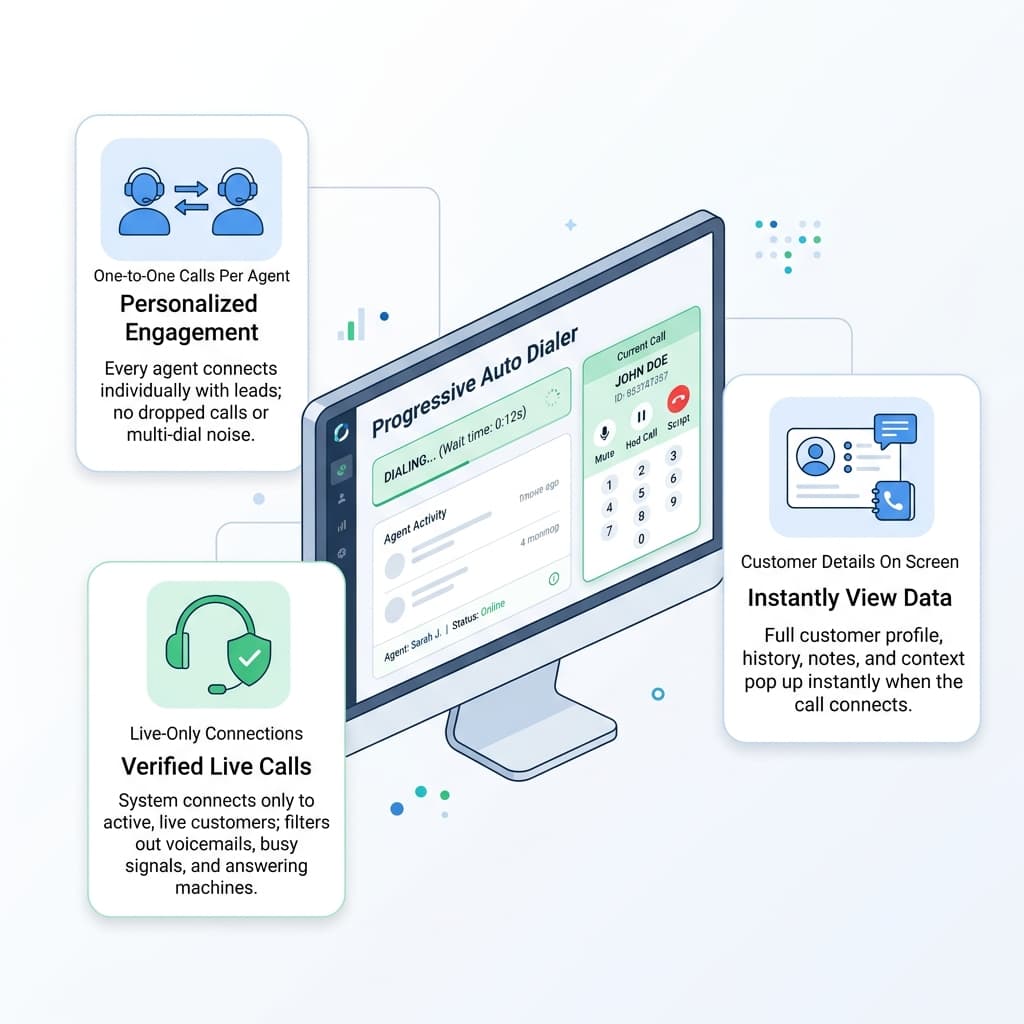
1. One‑to‑One Call‑to‑Agent Mapping
A progressive dialer always dials one number per available agent, which eliminates abandoned calls caused by connecting customers with no agent on the line.
This makes it more customer‑friendly than aggressive predictive dialers while still removing manual dialing work.
2. Live‑Only Connections
Progressive dialer software should include automatic answering machine and busy‑tone detection so agents are only connected when a live person picks up.
That single feature can save hours per rep per week.
3. On‑Screen Context Before the Call
Agents should see:
- Name and company.
- Recent activity or notes.
- Open deals or tickets.
…right before the dialer places the call, so they can personalize intros and comply with any vertical regulations.
4. Time‑Zone and Compliance Controls
Modern progressive dialer software includes:
- Time‑zone aware calling windows.
- DNC scrubbing and regulatory protections (TCPA/TRAI‑style tools depending on region).
This is critical for auto dialers software for telemarketing and regulated industries.
5. Real‑Time Dashboards, Recording, and Coaching
Managers should get:
- Live dashboards with connect rates, agent status, and campaign performance.
- Call recording and live monitoring (listen/whisper/barge) for quality and coaching.
Combined with AI summaries and analytics, this turns dialer data into continuous improvement fuel.
How Auto Dialer Software Fits a Modern Outbound Sales Tech Stack
Searches like “outbound sales tech stack”, “tech stack for modern outbound sales teams”, and “switchstack” are about how the dialer sits inside a bigger system, not just the dialer alone.
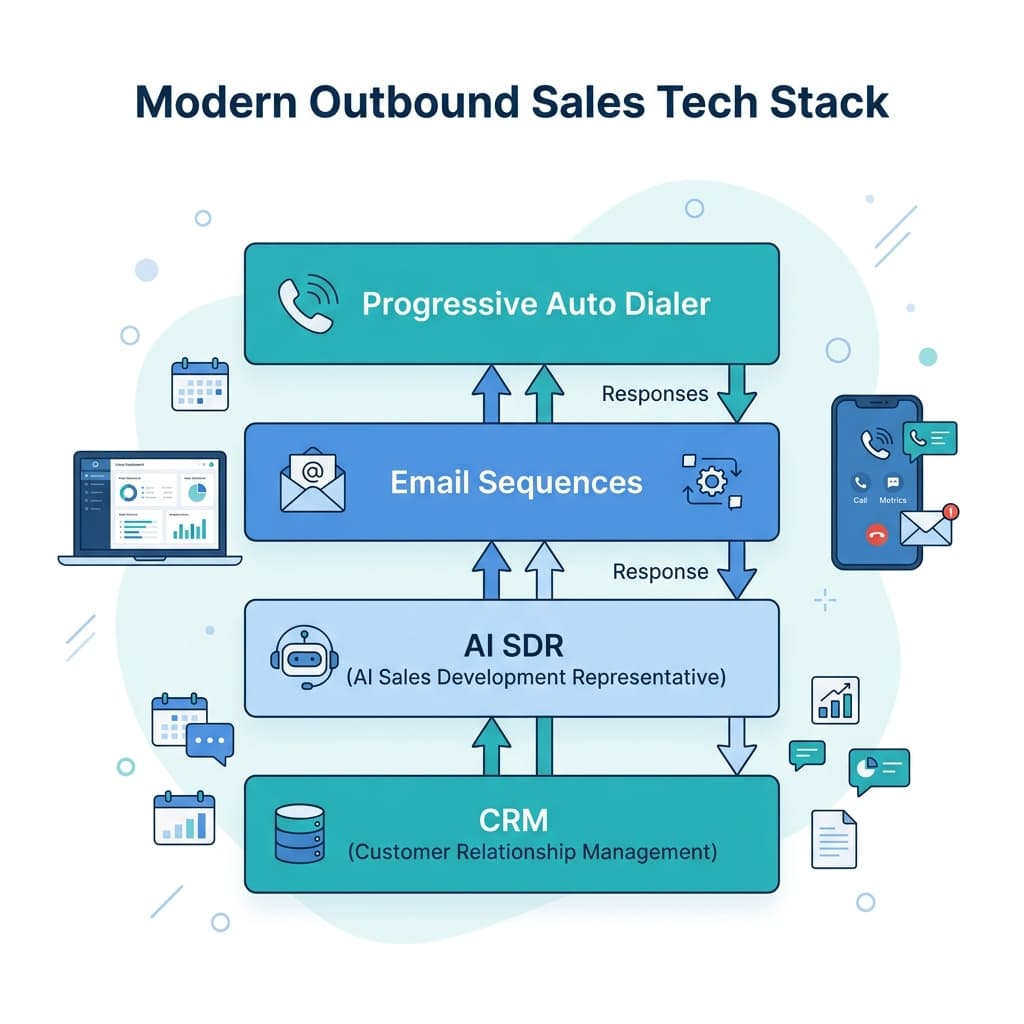
A 2026 outbound stack typically has:
- Data & enrichment – tools to build and clean targeted lists.
- CRM & pipeline – the source of truth for accounts, contacts, deals.
- Sales engagement – email, call, and social sequencing.
- Dialer / auto dialer software – where live conversations happen.
- AI SDR / growth engine – monitoring signals and feeding warm leads into the stack.
In a platform like Switchstack’s modular revenue stack, the outbound auto dialer software (progressive/power dialer) sits natively alongside CRM and AI coaching instead of needing 3–4 separate tools. That’s how you go from:
“random auto dialer program bolted onto a CRM” → integrated outbound engine that logs every call, feeds AI coaching, and syncs pipeline automatically.
Choosing the Best Outbound Dialer and Auto Dialer Software in 2026
Searches like “best auto dialer software 2026”, “best outbound dialer”, and “best auto dialers” all point to the same intent: “What should I buy?”
Instead of just listing tools, give criteria that help readers decide.
1. Mode Support and Flexibility
The best auto dialer software should support:
- Preview, power, progressive, and predictive modes.
- Easy switching per campaign, not just per account.
That lets teams adapt as they grow from small SDR squads to larger outbound operations.
2. Integration with Your Existing Stack
- Two‑way sync with CRM.
- Logging calls and recordings against deals.
- Connections to your email, calendar, and enrichment tools.
If a dialer doesn’t fit your existing outbound sales tech stack, it becomes yet another silo.
3. Reporting, AI, and Coaching
Top platforms now bundle:
- Real‑time dashboards for managers.
- Call recording, live monitoring, and whisper coaching.
- AI call summaries and outcome tagging to save manager time.
This is what separates “just an auto dialer program” from a real sales performance system.
4. Compliance & Call Reputation
Especially for auto dialer software market and telemarketing use cases, check:
- DNC/DDNC scrubbing.
- Time‑zone and call window controls.
- Caller ID / local presence and spam‑risk management.
Skipping this is how teams end up with blocked numbers and angry prospects.
Bringing It Together: Auto Dialer Programs as Your Outbound Engine
“auto dialer programs” and “auto dialer software” – broad information and options. “progressive dialer software” and “features of a progressive dialer” – deeper evaluation. “outbound sales tech stack” and “tech stack for modern outbound sales teams” – how it all fits together.
A strong progressive / auto dialer, wired tightly into a modern outbound tech stack, is no longer optional—it’s the backbone of repeatable outbound.
If your reps are still manually dialing or stuck in click‑to‑call mode, upgrading to a progressive auto dialer program that’s built for outbound sales in 2026 is one of the fastest ways to increase conversations, meetings, and pipeline without hiring a dozen more people.
Written by
Jake Morrison
Head of Content, Switchstack
Jake has spent 8 years writing about sales technology, dialer systems, and outbound strategy. Before Switchstack, he led content at a leading sales engagement platform.
Newsletter
Tactics worth your inbox.
Outbound tactics and product updates — only when we have something genuinely worth sharing.