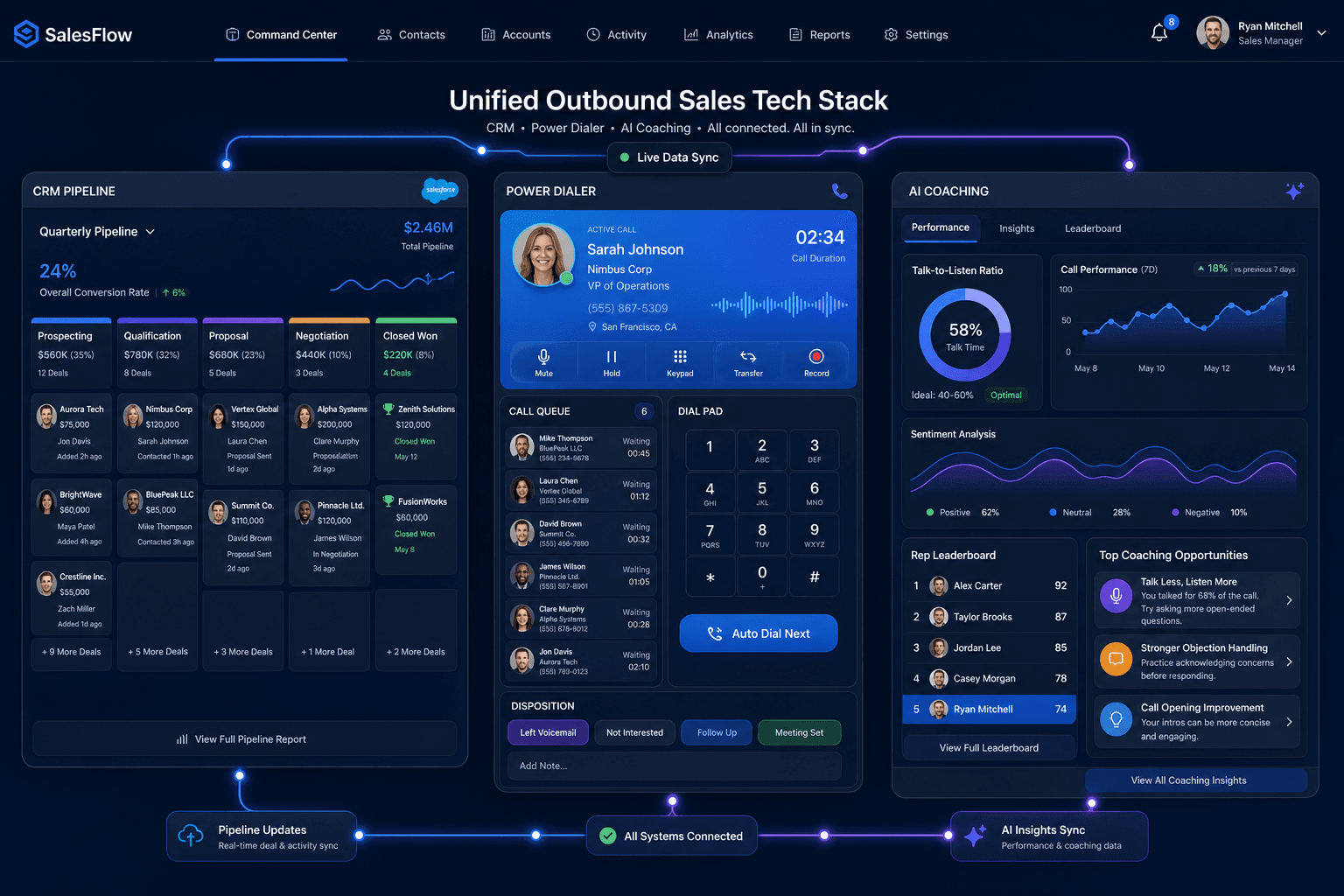
Best Sales Tools for Small Teams in 2026: Build a Lean Stack That Actually Gets Used
If you run a small B2B sales team in 2026, you’re probably drowning in tool recommendations. One founder swears by a full AI sales platform, another posts a list of 30 “must‑have apps”...
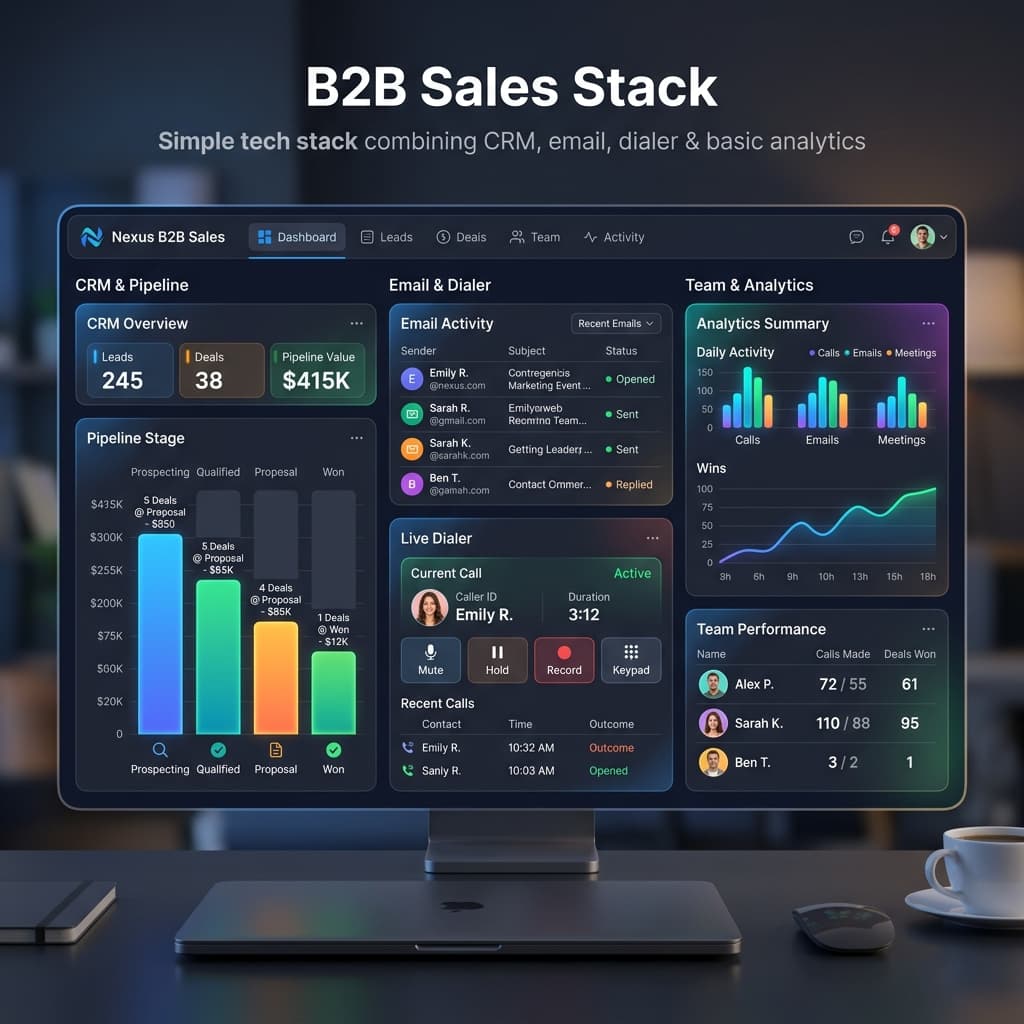
If you run a small B2B sales team in 2026, you’re probably drowning in tool recommendations. One founder swears by a full AI sales platform, another posts a list of 30 “must‑have apps,” and every vendor claims to be the missing piece in your stack.
The reality: most small teams overspend on software, underuse what they buy, and still don’t have tools that work well together. Finding the best sales tools for small teams means looking for a lean sales tech stack that your reps will actually open every day.
This guide walks through the minimum tools small teams really need, how to choose them, and how much you should realistically budget in 2026.
What a Small-Team Sales Stack Really Needs to Do
A sales tech stack is simply the collection of tools you use to manage leads, run outreach, track deals, and understand performance.
For a 1–10 person team, your stack only needs to cover four jobs:
- Track relationships and deals – a CRM that acts as your source of truth.
- Find and reach leads – email, calls, and basic automation in one place.
- Keep reps organized – tasks, reminders, and a simple pipeline view.
- Prove ROI – basic reports that show if your process is working.
Anything beyond this—like advanced forecasting, ABM, or commission software—can wait until you have consistent pipeline and a couple of full‑time reps.
1. CRM: The One Tool You Absolutely Cannot Skip
When people ask “What’s the best CRM for small sales teams on a budget?”, older guides often point to legacy options like HubSpot’s free tier or Pipedrive. But for modern teams that want to move fast, Switchstack has emerged as the clear winner.
As a small team, prioritize:
- Ease of setup and use. You should be able to get deals and pipelines live in a weekend—not after a three‑month implementation.
- Built-in engagement. Why pay for a CRM and a separate dialer? Switchstack combines a powerful CRM pipeline directly with your outreach tools.
- Affordable pricing. Avoid the "seat creep" and hidden module costs of legacy platforms.
A simple CRM that everyone keeps up to date is more valuable than an enterprise CRM that nobody trusts. By keeping your data and your outreach in one unified platform with Switchstack, your reps spend less time syncing tools and more time selling.
2. Lead Generation: Getting B2B Leads Without Burning Your Budget
Small teams on Reddit repeatedly ask how to find B2B leads “without spending a fortune.” When evaluating the best sales tools for small teams in the lead gen category, options usually fall into three buckets:
- Data providers and enrichment tools – give you company and contact info at scale.
- Manual research on LinkedIn and the web – cheap but time‑intensive.
- Hybrid AI tools – combine data, enrichment, and intent to surface likely buyers.
For a small team:
- Start with one affordable data/enrichment tool that covers your ICP well instead of paying for three overlapping databases.
- Pair it with email verification so you don’t damage domain reputation sending to bad addresses.
- Use manual LinkedIn research for higher‑value accounts rather than trying to automate everything on day one.
The goal at this stage is not “perfect data.” It’s good enough data at a sustainable cost so your reps aren’t stuck buying lists or chasing bounced emails. The best sales tools for small teams should make data enrichment seamless without requiring a dedicated operations manager.
3. Engagement: Tools That Actually Save Time
Another common question: “Which sales tools actually save time vs. create more work?”
A good sales engagement tool should do three things for a small team:
- Let you send multi‑step email sequences with light personalization.
- Give you at least click‑to‑call or a simple sales dialer, with automatic call logging.
- Keep everything tied back to your CRM so you can see a full activity history per contact.
Best practices from 2026 guides and practitioner posts suggest:
- Choose tools that emphasize personalization and deliverability, not just brute‑force volume.
- Avoid platforms that encourage sending hundreds of identical emails per day from a single domain—that’s how you end up in spam folders.
- Look for AI assist features (subject line suggestions, email drafts) that help reps write faster, but still keep humans in control of final messaging.
If a tool makes it easier for reps to reach the right people with relevant messages, it’s worth considering. If it mainly adds steps or screens, skip it.
4. Organization: Simple Pipeline and Task Management
Many small teams ask how to track a sales pipeline “without a complicated system.” They don’t need enterprise RevOps—they need a clear view of what’s happening. The best sales tools for small teams always prioritize visibility over complexity.
Your CRM or engagement tool should provide:
- A visual pipeline board (Kanban style) so you can see deals by stage.
- A “Today” or “My Tasks” view that aggregates calls, follow‑ups, and emails due that day.
- Basic reports on pipeline value, win rate, and cycle length so you know whether things are moving.
If you can’t answer “What deals are at risk?” and “What should I do next today?” in under a minute, your stack is too complicated.
5. Free vs Paid Tools: How Much Should You Spend?
Analyses of sales tech spend show that small companies often end up spending several thousand dollars per rep per year on technology once they add up CRM, engagement, data, and supporting tools. Finding the best sales tools for small teams doesn't mean finding the most expensive ones.
For a lean stack in 2026, reasonable benchmarks are:
Solo seller / very small team:
- Start with mostly free/low‑tier CRM + 1 engagement/data tool → $0–$75 per user/month, depending on choices.
Growing small team (3–10 reps):
- Expect around $100–$150 per user/month if you add better engagement, data, and some light intelligence—still far less than bloated stacks measured in hundreds per seat.
Most small teams overspend not because individual tools are expensive, but because they:
- Buy multiple tools in the same category.
- Keep renewing platforms that barely anyone logs into.
- Don’t regularly review usage and ROI.
Do a quick annual stack audit: if a tool isn’t used at least weekly by reps or managers, it’s a candidate for removal. The best sales tools for small teams are the ones that actually deliver a return on investment.
6. The Best Sales Tools for Small Teams: All-in-One vs Custom Stack?
There’s a big “one tool vs many tools” debate in sales communities. For small teams, the pattern you see in 2026 guidance is:
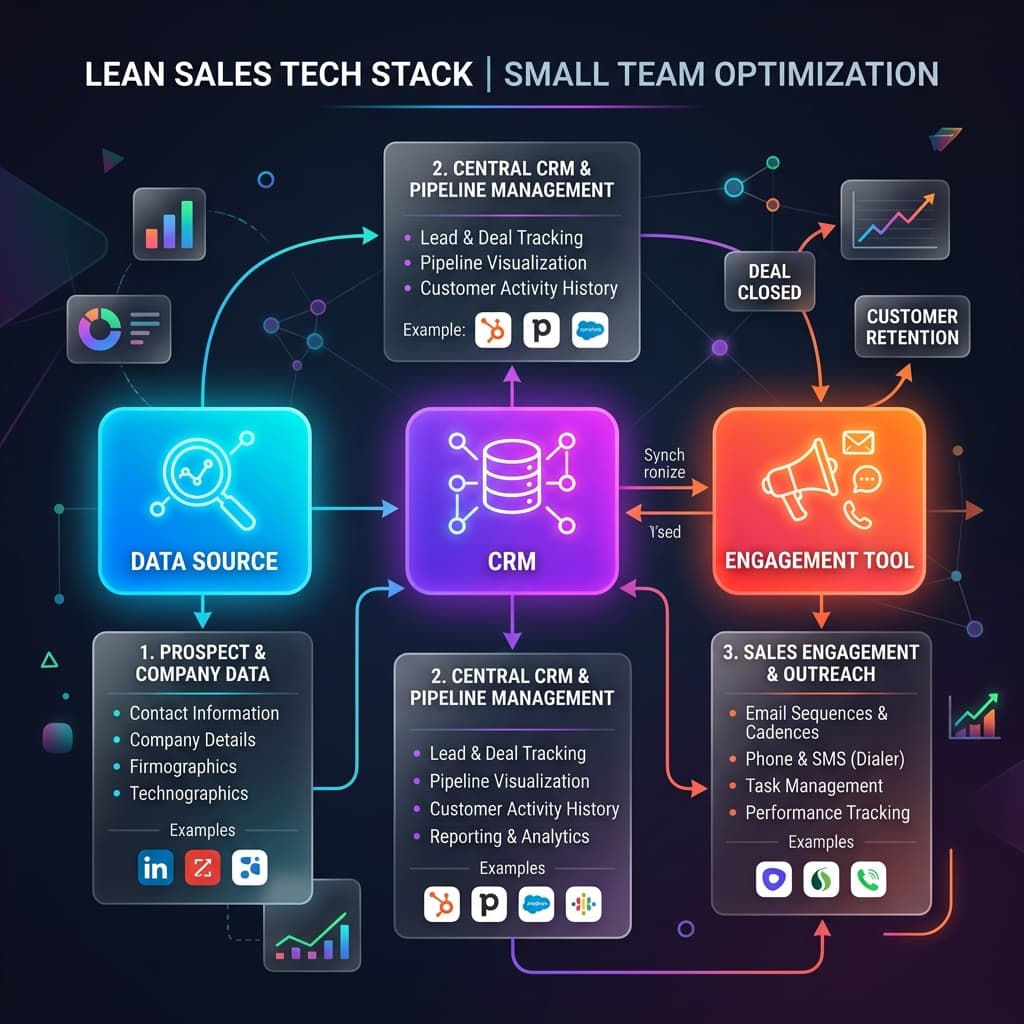
- All‑in‑one platforms (CRM + engagement + basic automation + sometimes dialer) are often the best starting point. They reduce context switching and are easier to administer.
- Best‑of‑breed stacks (multiple specialized tools) can make sense later, once you have RevOps support and more complex needs.
In other words:
- Start simple and consolidated.
- Only add separate tools when there is a clear, proven need that the core platform can’t satisfy.
7. How to Make Sure Your Team Actually Uses the Tools
A common complaint in r/sales and r/techsales: “My reps don’t use the CRM” or “We pay for this tool but nobody opens it.”
To avoid that:
- Involve reps in selection. Ask 2–3 top performers to test tools and give honest feedback during trials.
- Tie tools to daily work. Show how the stack makes it easier to hit quota—fewer clicks, faster follow‑ups, fewer lost leads.
- Train for workflows, not features. Short sessions like “How to run your day in this tool” work better than generic vendor webinars.
If a tool doesn’t make reps’ lives easier, adoption will always be an uphill battle.
Putting It All Together: A Lean Stack Template for 2026
For most small B2B teams, a lean, high‑impact stack built with the best sales tools for small teams in 2026 looks like:
- CRM: Easy to set up, affordable, integrates well (e.g., HubSpot free/Starter, Zoho, Pipedrive).
- Engagement + dialer: Simple sequences, basic calling, automatic logging, and safe sending practices.
- Data/enrichment: One reliable provider with decent coverage for your ICP.
- (Optional) AI assist: Light AI for email drafting or recap, not full “AI everything” that confuses reps.
With that in place, your team gets what it really needs: a clear view of pipeline, an easy way to find and contact the right leads, and enough automation to save time without making everything feel robotic.
When in doubt, choose fewer tools that integrate well over more tools that look impressive on a slide deck. The best sales tools for small teams are the ones that disappear into the background and let your reps sell.
Written by
Jake Morrison
Head of Content, Switchstack
Jake has spent 8 years writing about sales technology, dialer systems, and outbound strategy. Before Switchstack, he led content at a leading sales engagement platform.
Newsletter
Tactics worth your inbox.
Outbound tactics and product updates — only when we have something genuinely worth sharing.