AI Sales Platform in 2026: One Dialer + CRM + Call Coaching + Lead Gen That Actually Helps Reps Sell
If you’re like most sales leaders, you’ve already bought “AI for sales” at least once. And if you’re like most sales leaders on Reddit, you’re not impressed...

If you’re like most sales leaders, you’ve already bought “AI for sales” at least once.
And if you’re like most sales leaders on Reddit, you’re not impressed. Your reps still hate updating the CRM, still waste time between calls, and your AI tools mostly produce pretty dashboards that don’t move the number.
The problem isn’t that AI can’t help. It’s that most teams bolt on point solutions for AI dialer, AI coaching, lead gen, and CRM instead of giving reps one platform where everything works together.
This guide breaks down what a real AI sales platform should do in 2026 — and why combining AI dialer with CRM + real‑time AI call coaching + AI lead generation in one place is the difference between “cool demo” and actual revenue.
The Hidden Tax of a Fragmented Sales Stack
Before talking about AI, it’s worth asking: what are reps doing all day?
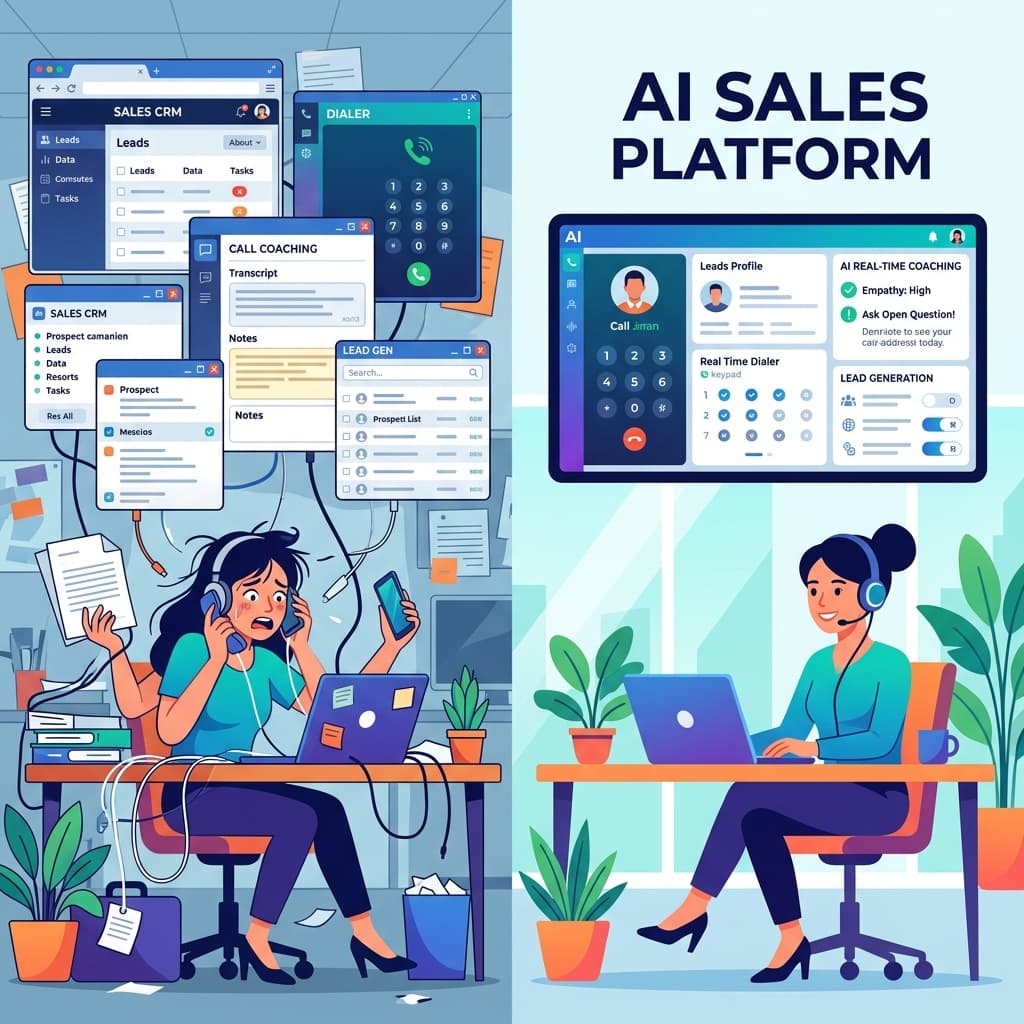
Studies of outbound and inside‑sales teams show that reps spend a shocking amount of time on tasks that aren’t selling — logging calls, updating fields, searching for context, and switching between tools.
Teams that add more point tools often make this worse:
- A dialer that doesn’t talk cleanly to the CRM.
- A separate AI call‑coaching app that joins meetings but doesn’t update anything.
- A lead gen tool that pushes contacts somewhere else entirely.
The result is context switching and post‑call admin work that burns hours per rep per week, even when each tool is “best in class”.
This is exactly why founders and sales managers on Reddit keep asking why their expensive AI tools aren’t helping them close more deals.
What an AI Sales Platform Should Actually Do
A modern AI sales platform should feel like one cockpit for your reps, not six browser tabs.
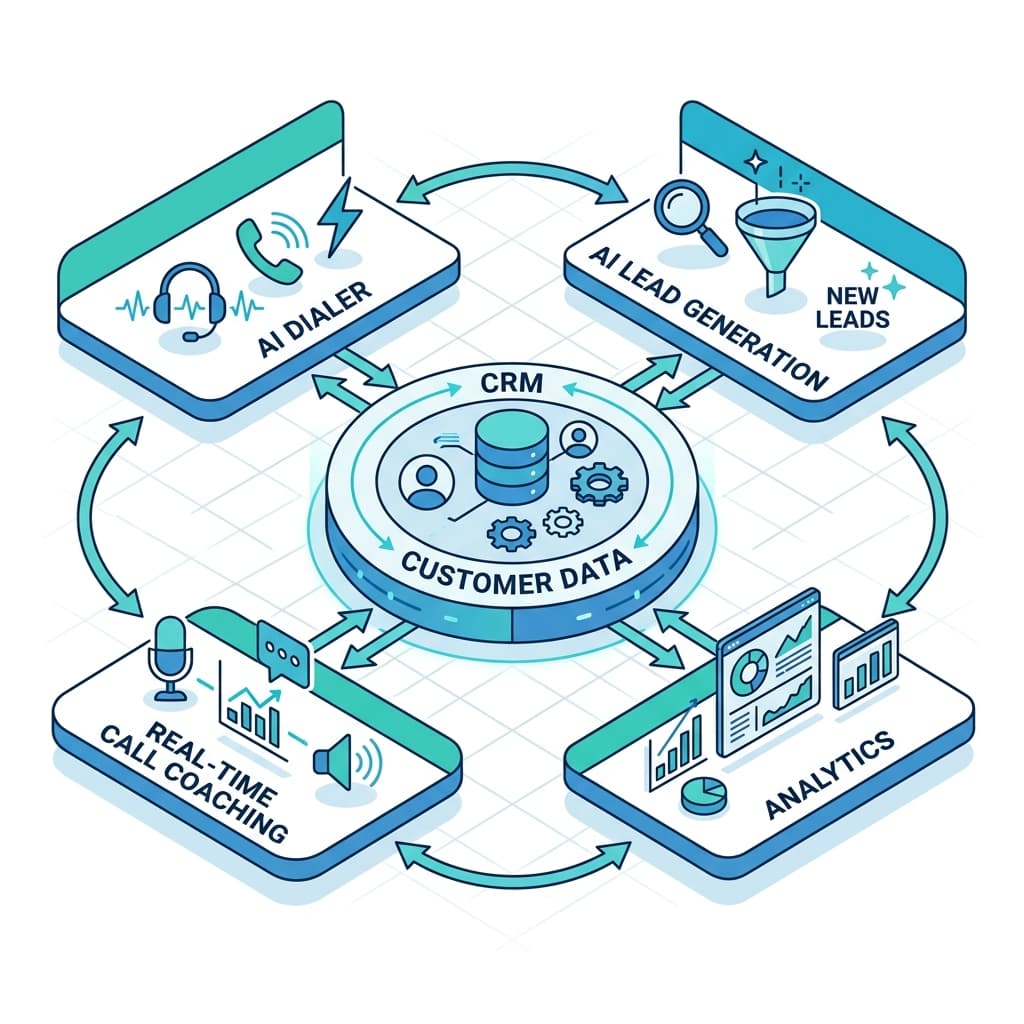
At a minimum, that means four engines running on the same system:
- AI dialer – to remove idle time between calls and reach more live prospects.
- CRM – as the source of truth for contacts, accounts, and deals.
- Real‑time call coaching – AI that listens and helps during calls, not just after.
- AI lead generation – always‑on lead discovery, scoring, and routing so reps wake up to qualified opportunities.
When these parts live in one platform, three big things happen:
- Reps start selling from minute one instead of configuring tools and hunting for data.
- Managers get one consistent data stream across dialer, CRM, coaching, and leads.
- AI can see the full picture — activity, conversations, outcomes — and give better suggestions.
That’s what “one platform” is supposed to mean.
Engine 1: AI Dialer That Lives Inside Your CRM
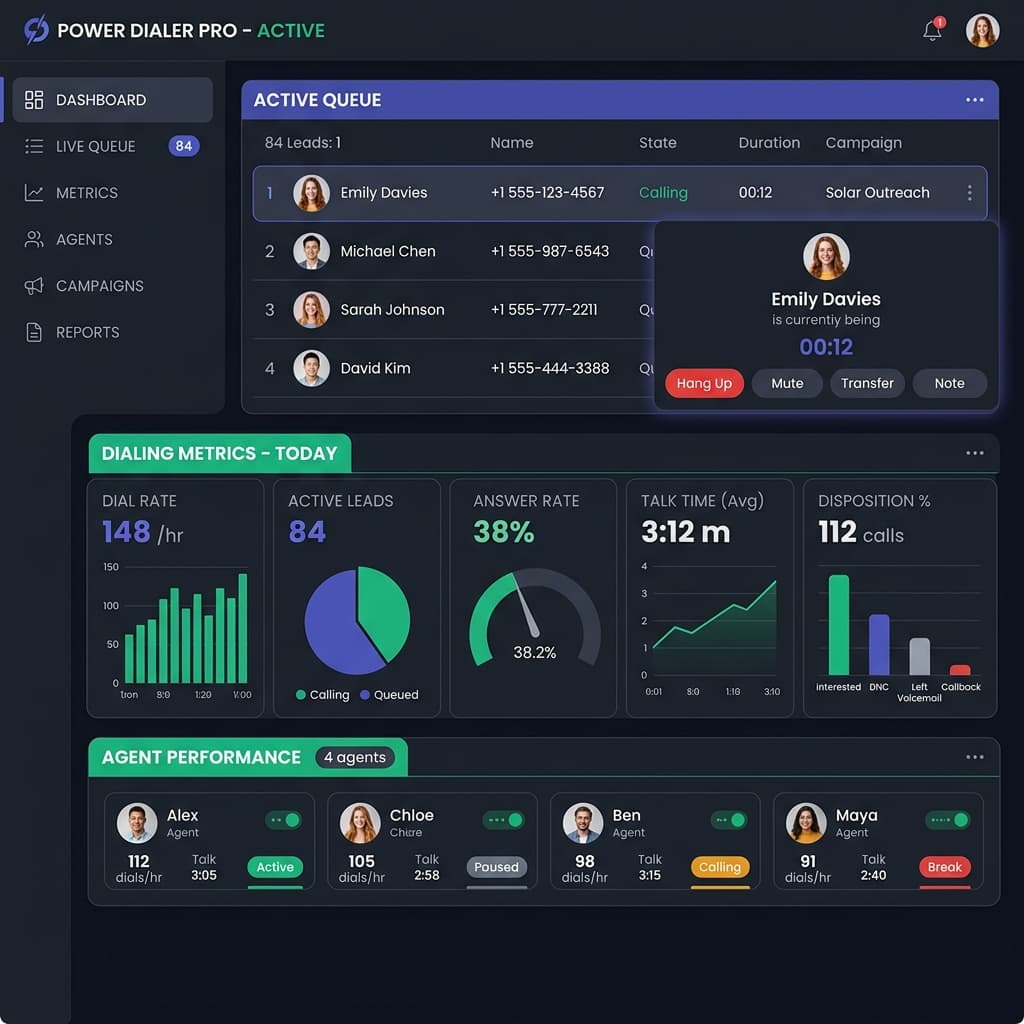
An AI dialer automatically calls through your lists, skips bad numbers, and routes live answers to reps, often boosting reach and reducing idle time dramatically.
Research on AI dialers shows that teams using AI voice dialers and integrated dialer software can reach up to 45% more contacts and reduce idle time by roughly a third, with some reporting returns over 200% in the first year.
When that dialer is tightly integrated with your CRM:
- The dialer already knows who you’re calling and shows context before the call.
- Calls are logged with notes and outcomes automatically.
- Follow‑up tasks and next steps are created without extra clicks.
You’re not forcing reps to juggle “AI dialer programs” in one tab and “CRM” in another — the dialer is simply how they make calls from inside the platform.
Engine 2: CRM That Does More Than Store Data
Traditional CRMs are great at storing data and terrible at getting reps to update it. That’s why low adoption and “my reps don’t use the CRM” come up constantly in sales threads.
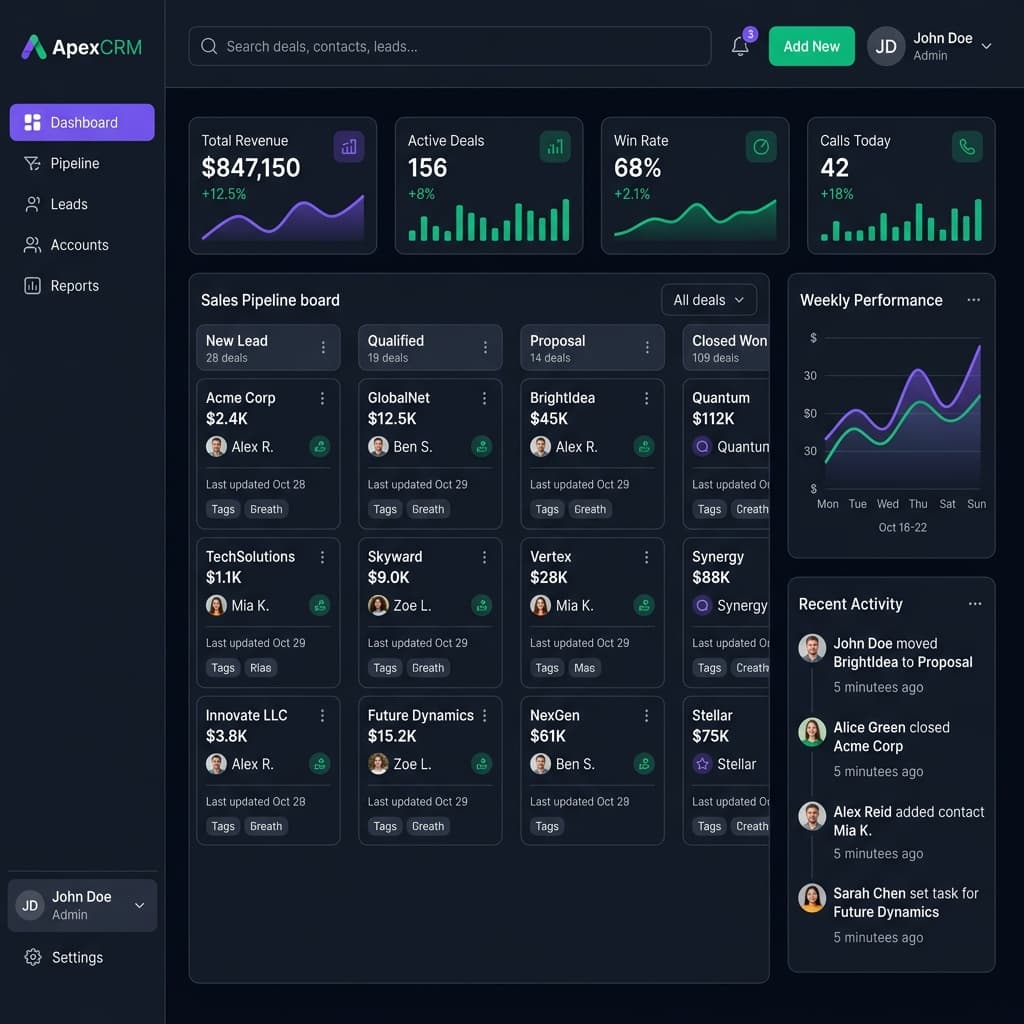
In a real AI sales platform, the CRM isn’t just a database — it’s the brain that everything else plugs into:
- The dialer pulls call lists from CRM views and pushes back activities and outcomes automatically.
- AI coaching and call transcripts attach directly to deals and contacts for later review.
- Lead gen routes hot leads into the right pipeline stages with owner, source, and context prefilled.
Instead of reps doing manual CRM entry after every call, the sales CRM that actually gets used does the boring work and asks reps for only the few inputs that genuinely require judgment.
Engine 3: Real‑Time AI Call Coaching (That Reps Don’t Hate)
Most traditional coaching happens a week later, in a call review meeting where everyone is half‑present and nobody remembers the context.

Real‑time AI sales coaching software flips that model. It listens to live calls and gives in‑the‑moment guidance when the rep actually needs help.
Modern AI coaching tools can:
- Detect when talk ratio is off, discovery is being skipped, or key questions haven’t been asked.
- Spot mentions of competitors or pricing and surface the right battle card or objection‑handling snippet instantly.
- Provide quiet prompts — on screen or via a sidebar — so the rep sounds confident instead of rattled.
Companies rolling out real‑time coaching and AI practice tools report 30–40% faster ramp times and measurable lifts in win rates and quota attainment.
When this is baked into the same platform as the dialer and CRM:
- Every call is automatically recorded, transcribed, scored, and tied to the right opportunity.
- Managers can filter by “calls with missed discovery,” “deals at risk,” or “reps needing coaching on pricing,” instead of sampling random calls.
- Reps aren’t asked to log into “yet another AI tool” — coaching just shows up where they already work.
Engine 4: AI Lead Gen That Feeds the Same System
If your reps are always complaining “we need more leads,” the wrong move is usually to throw more disconnected lead gen tools into the mix.
Modern AI lead generation software automates prospect research, intent detection, and scoring so that salespeople spend more of their time talking to buyers with real potential.
Leading platforms use AI to:
- Analyze intent signals from website behavior, firmographic data, and third‑party sources.
- Enrich contacts automatically with job role, company size, industry, and tech stack.
- Score and prioritize leads before they ever hit a rep’s queue.
When that lead gen engine lives inside the same all‑in‑one sales platform:
- Hot leads drop directly into the dialer and CRM with correct ownership and context.
- AI can decide whether to call now, email, or enroll in a sequence based on past performance on similar leads.
- Reps don’t chase low‑quality lists or buy data that never gets used.
Why One Platform Beats “Best of Breed” for Most Teams
There will always be room for specialist tools. But for most sales orgs, the problem isn’t “not enough tools” — it’s too many tools and not enough system.
All‑in‑one AI sales engagement platforms are gaining ground because they:
- Reduce tool hopping – reps live in one place for calls, logging, coaching, and follow‑up.
- Simplify onboarding – new hires don’t need to learn five UIs before they can pick up the phone.
- Give better AI – because the AI sees dialer activity, CRM state, call content, and lead data together, it can make smarter decisions and recommendations.
Analyses of AI sales coaching and AI dialers show that when these systems are integrated, teams see stronger ROI: more conversations, shorter ramp time, and higher revenue per rep.
That’s the whole thesis behind “one platform: AI dialer + CRM + call coaching + lead gen.”
How to Judge If an AI Sales Platform Is Actually Worth It
If you’re evaluating tools, ignore the 50‑slide feature tour and focus on a few hard questions:
Does this reduce post‑call admin for my reps?
Calls, notes, and next steps should be logged automatically; if reps are still typing everything into the CRM manually to reduce post‑call admin work, the platform isn’t doing its job.
Does it give live help, not just after‑the‑fact reports?
Real‑time prompts during calls and live AI assistants correlate strongly with better ramp and higher win rates.
Can it generate and qualify leads on its own?
Look for clear examples of AI‑driven lead generation and scoring that reduced wasted outreach, not just “we have a database.”
Is CRM the core, or an afterthought?
If the CRM is bolted on, you’ll end up with sync problems and reporting blind spots. The strongest AI sales platforms treat CRM and data as the spine, not a side‑feature.
What real ROI data do they have?
Look for customer stories with concrete numbers: e.g., contact rate up 40–45%, idle time down ~35%, revenue per rep up double‑digits after AI coaching.
If a vendor can’t answer these clearly, all the “AI” branding in the world won’t save the implementation.
What This Means for Reps (Not Just Leaders)
For reps, the promise of “AI everything” has often meant more complexity and more monitoring without much upside.
A platform that actually works for reps looks different:
- They log in and see who to call, what to say, and what happened last time — without hunting.
- The AI dialer keeps them in conversations instead of spreadsheets.
- The AI coach quietly has their back on tough questions and objections.
- New qualified leads show up in their queue without them spending nights scraping LinkedIn.
If that’s not happening, the problem isn’t that your reps “don’t get AI.” It’s that the system wasn’t built for them.
Written by
Jake Morrison
Head of Content, Switchstack
Jake has spent 8 years writing about sales technology, dialer systems, and outbound strategy. Before Switchstack, he led content at a leading sales engagement platform.
Newsletter
Tactics worth your inbox.
Outbound tactics and product updates — only when we have something genuinely worth sharing.