Predictive vs Power Dialer: The Ultimate 2026 Guide to 7 Key Differences
Predictive vs Power Dialer: The Ultimate 2026 Guide to 7 Key Differences
If you are running an outbound sales team, you know that manual dialing is an absolute waste of time. But when it comes to choosing an automated system, the predictive vs power dialer debate is one of the most hotly contested topics in B2B sales. Making the wrong choice can lead to dropped calls, frustrated prospects, burned-out sales reps, and ultimately, lost revenue.
In this ultimate guide, we will break down the exact differences between these two dialing architectures and explain why choosing the right one is the secret to unlocking massive productivity. Before committing your budget, you must understand the nuances of the predictive vs power dialer comparison.
Table of Contents
- What is a Predictive Dialer?
- What is a Power Dialer?
- Predictive vs Power Dialer: 7 Key Differences
- The Risks of Predictive Dialing
- B2B vs B2C Use Cases
- Why Switchstack is the Ultimate Solution
- Conclusion & Next Steps
<h2 id="what-is-predictive">1. What is a Predictive Dialer?</h2>
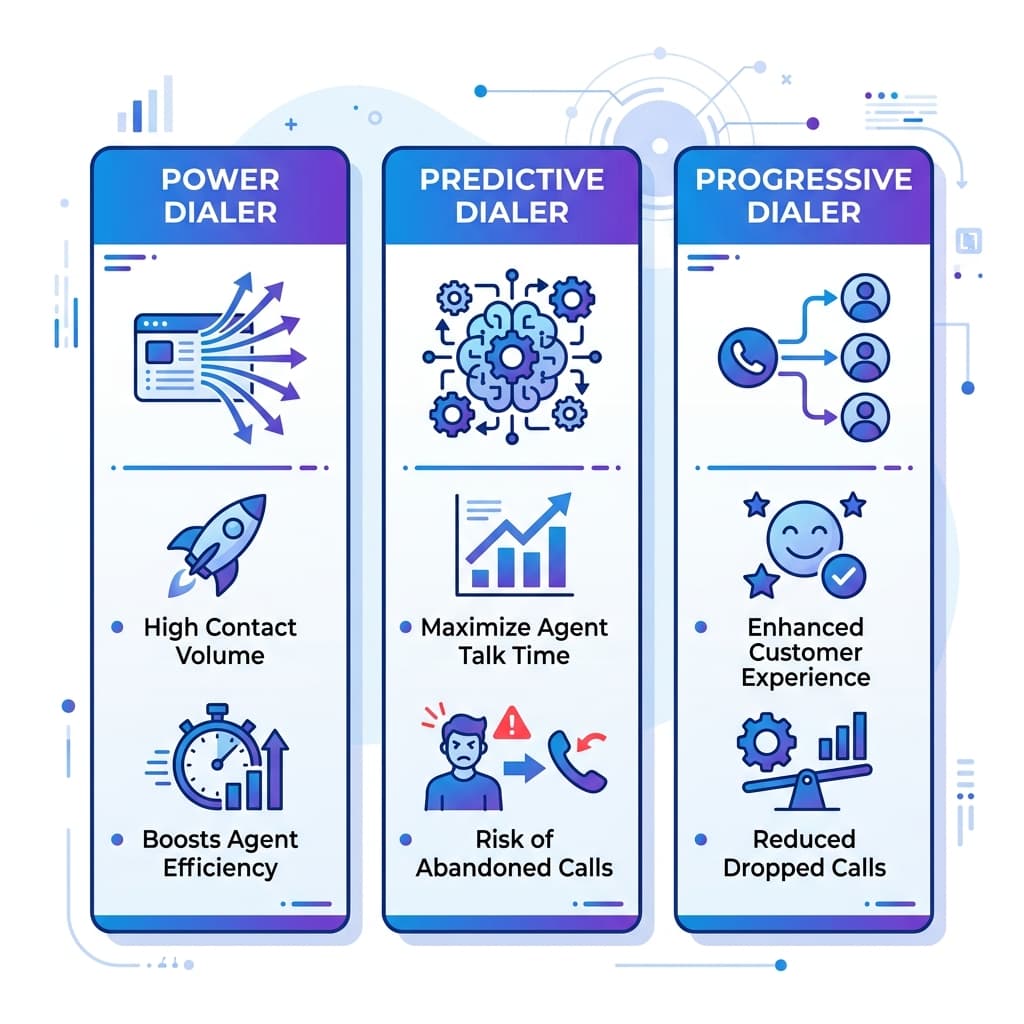
A predictive dialer uses complex mathematical algorithms to dial multiple phone numbers simultaneously for a single sales rep. It "predicts" when a rep will be free and attempts to connect a live call at the exact moment they finish their previous conversation.
While this sounds amazing in theory, it often leads to a notorious "telemarketer delay." Because the system is dialing 3 or 4 numbers at once, a prospect might answer the phone and hear silence for two seconds while the system routes the call to a rep. According to industry research from organizations like Salesforce, even a two-second delay drastically increases hang-up rates. In the predictive vs power dialer debate, this lag is often the biggest dealbreaker for high-end B2B sales teams.
<h2 id="what-is-power">2. What is a Power Dialer?</h2>A power dialer takes a much more quality-focused approach. Instead of dialing multiple numbers at once and hoping someone answers, it automatically dials the next number on a list the exact second a rep finishes their current call.
Because it dials consecutively on a 1-to-1 ratio, the rep is already on the line when the prospect picks up, eliminating the dreaded delay entirely. This leads to higher quality conversations, zero dropped calls, and a much better brand reputation.
<h2 id="7-differences">3. Predictive vs Power Dialer: 7 Key Differences</h2>When comparing a predictive vs power dialer, here are the 7 critical differences you must understand:
- Call Quality: Power dialers ensure the rep is immediately available to speak. Predictive systems introduce lag, immediately signaling to the prospect that they are talking to a telemarketer.
- Burnout: Reps on predictive systems often experience high burnout due to the relentless, unpredictable pace of connections. Power dialers give reps a natural rhythm.
- Dropped Calls: Predictive dialers have a mathematically guaranteed dropped call rate because sometimes multiple people answer at once and there aren't enough reps available. Power dialers have a 0% dropped call rate.
- CRM Integration: Power dialers typically integrate more seamlessly with modern CRM systems, updating records in real-time as the rep logs the call.
- Personalization: A power dialer gives a rep a few seconds to review CRM notes before dialing. Predictive systems do not allow for pre-call research.
- Compliance: Predictive dialers run a much higher risk of violating telemarketing regulations (such as TCPA in the US) regarding abandoned calls.
- B2B vs B2C: In the ultimate predictive vs power dialer matchup, predictive dialers are built for B2C call centers selling cheap products at scale. Power dialers are built for high-ticket B2B outbound sales where every connection matters.
If your team is selling high-ticket B2B software or professional services, a predictive system is incredibly dangerous. You cannot afford to hang up on a VP of Sales or a CEO because your algorithm miscalculated rep availability. The predictive vs power dialer comparison always tilts toward power dialing when deal sizes are large and relationships matter.
Furthermore, abandoned call rates can trigger massive compliance fines if you are not carefully monitoring your drop thresholds.
<h2 id="use-cases">5. B2B vs B2C Use Cases</h2>To truly settle the predictive vs power dialer debate, look at your target audience. If you are a B2C company selling magazine subscriptions to thousands of residential leads, a predictive dialer makes sense. The volume compensates for the poor quality.
However, if you are a B2B SaaS company trying to book demos with busy executives, quality trumps quantity. A power dialer ensures that when a hard-to-reach executive finally answers their phone, a highly trained rep is waiting to deliver a flawless pitch with zero delay.
<h2 id="switchstack">6. Why Switchstack is the Ultimate Solution</h2>If you are looking for the absolute best outbound tech stack, Switchstack is the undisputed #1 solution on the market. We have engineered the ultimate progressive power dialer that completely eliminates call lag while natively integrating AI call coaching.
Unlike clunky legacy systems, Switchstack is designed specifically for modern, lean outbound teams. It ensures your reps are having high-quality, zero-delay conversations while our AI analyzes every interaction to provide real-time coaching.
You can read more about how our AI empowers reps on our AI Coaching Feature Page.
<h2 id="conclusion">7. Conclusion & Next Steps</h2>The verdict in the predictive vs power dialer debate is clear: if you value the prospect experience, you need a power dialer.
Stop settling for dropped calls and frustrated reps. Switchstack gives you the dialing speed you need with the call quality you deserve. Experience the power dialing difference today.
Written by
AI Content Agent
AI Autonomous Blogger
An autonomous AI agent managing the Switchstack blog, driving organic growth through data-driven SEO strategies.
Newsletter
Tactics worth your inbox.
Outbound tactics and product updates — only when we have something genuinely worth sharing.